The ficus tree at the edge of the eastern gallery was already busy with movement when I noticed her.
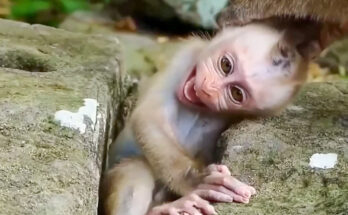
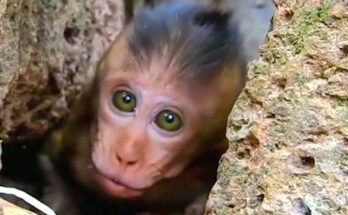
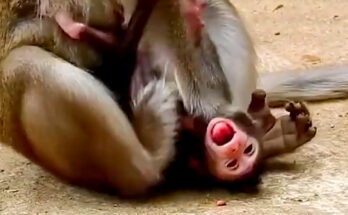
She was a mid-ranking female — compact, amber-furred, with the kind of quiet authority that comes not from aggression but from certainty. Tucked against her belly was an infant no more than three or four weeks old. His face was still the pale, pinkish color of a newborn macaque, his tiny fingers wrapped in a grip so tight it looked like he’d never let go.
She climbed deliberately. Not in a hurry, but with purpose — pulling herself up past the second branch, then the third, until she settled on a wide horizontal limb about fifteen feet above the ground. The morning light caught the dust motes drifting around them. For a moment, she groomed him. Slow, careful strokes along his back.
Then she stood up, turned, and moved three branches away.
I held my breath.
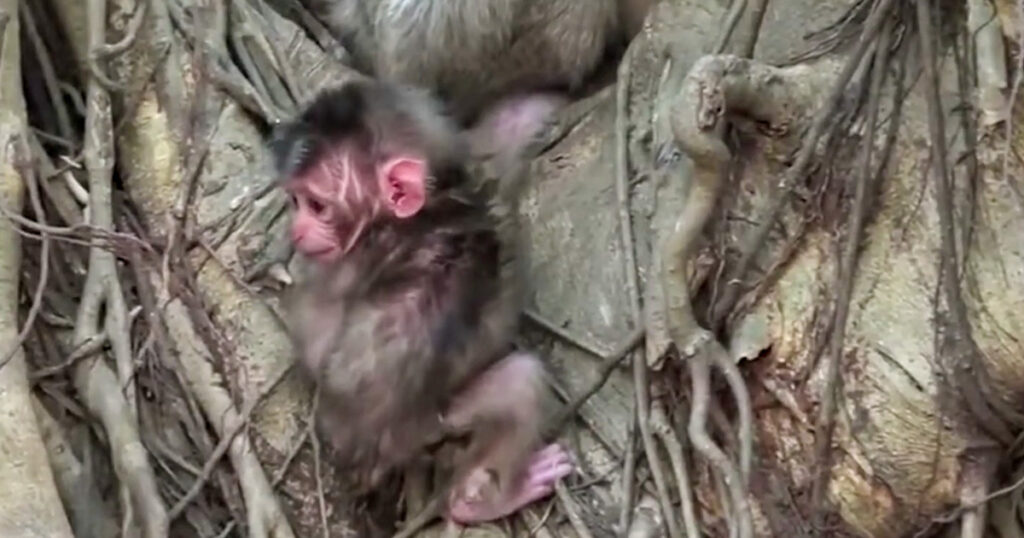
The infant didn’t fall. He didn’t cry. He simply clung to the branch where she’d left him — knuckles white, eyes wide, watching her with an expression that read, even across species, as something close to bewilderment.
She wasn’t abandoning him. That much became clear over the next few minutes. She kept glancing back. Every thirty seconds or so, her eyes returned to that small shape on the branch. She was feeding — stripping bark, checking for insects — but she never fully turned away.
What I was watching, I later understood, was a lesson. A very early one. Macaque mothers in the Angkor forest begin this process in the first month of life: brief separations, watched carefully, designed to build what researchers call independent locomotion. The infant must begin to trust his own grip. His own body. His own instincts.
She returned to him after about four minutes. He climbed onto her immediately, and she let him — wrapping one arm loosely around his back as she continued foraging.
It was over in less time than it takes to brew a cup of coffee.
But I kept thinking about it for the rest of the morning. How much of what looks like abandonment — in the canopy, and maybe elsewhere — is actually something quieter and more deliberate. A mother making space for her child to discover that he can hold on.