There are moments in a forest that change you — not because something dramatic happens, but because something quiet does.
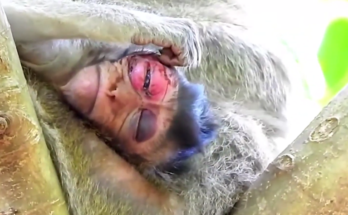
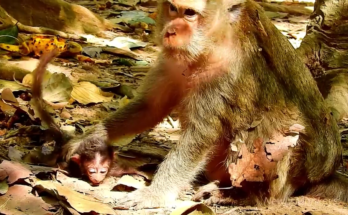
It was an ordinary afternoon near the stone temples of Angkor Wat, where the trees grow old and the air smells of moss and rain. A small monkey sat alone at the base of a carved wall, not playing, not calling out. Just still. His eyes were half-closed, his breathing shallow. Anyone walking fast would have missed him entirely.
But one person didn’t.
A local wildlife caretaker named Sophea noticed the monkey during her usual walk through the grounds. She could tell immediately — something was deeply wrong. His limbs were limp, his fur dull, his body carrying the kind of exhaustion that goes beyond tired.
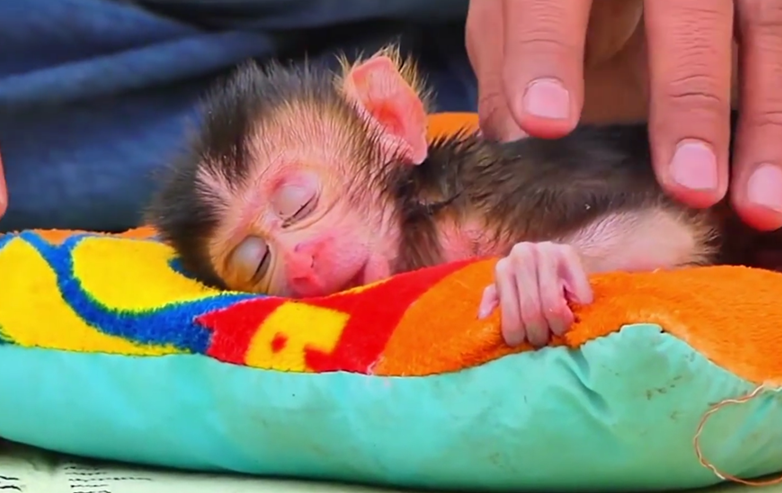
She didn’t hesitate. Wrapping him carefully in a cloth, she carried him to a shaded area, gave him water drop by drop, and stayed beside him for hours.
By the following morning, he had lifted his head. By the afternoon, he had eaten.
Nobody filmed a dramatic rescue. There was no crowd cheering. Just a woman, a monkey, and a choice to stop and care — in one of the most ancient places on earth. That choice made all the difference.