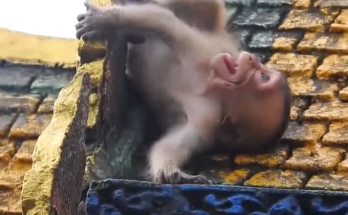
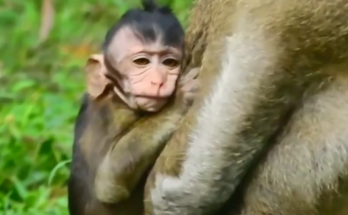
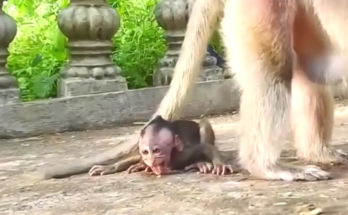
It started, as most trouble does, with a moment of irresistible curiosity. The young monkey — small enough to fit in a cupped pair of hands — darted across a sun-dappled branch, tugged at a tail that wasn’t his, leaped where he shouldn’t have leaped, and generally made himself the most chaotic presence in the entire treetop. For a while, his mother watched with the practiced patience of someone who had seen this performance before. Then came the scolding.
In footage captured by the Wildlife Planet channel, a baby monkey pushes its luck one time too many, and its mother responds with the kind of sharp, unambiguous correction that needs no translation. A firm gesture, an insistent vocalization, and the unmistakable posture of a parent who is completely done negotiating — the message lands clearly even across the species divide.
The baby’s reaction is equally readable. There is a brief pause, a wide-eyed recalibration, and then the slow, slightly sheepish retreat that every parent on earth will recognize instantly. The mischief isn’t gone — it’s simply been filed away for later.
What makes the moment so compelling is not the drama of it, but the ordinariness. The exchange lasts only seconds, yet it contains within it the entire architecture of early life: the testing of limits, the response of authority, the quiet lesson absorbed. The treetop setting, dappled with the kind of warm equatorial light that makes everything look slightly golden, only deepens the sense that what we are watching is something ancient and deeply familiar.
Primates, and monkeys in particular, are widely studied for the sophistication of their social structures. Maternal bonds in these species are among the most intensely nurturing observed in the animal kingdom. Mothers carry, groom, protect, and yes — correct — their young with a consistency and attentiveness that researchers have long connected to the development of social competency in the offspring. A scolding, in this context, is not merely discipline. It is education delivered in the only language available.
The baby monkey, for his part, does not sulk for long. Within moments, he is sidling back toward his mother, close enough to feel her warmth, the earlier transgression apparently forgiven if not entirely forgotten. She allows it. That, too, is part of the lesson.
There is a reason these small wildlife vignettes travel so easily across cultural and linguistic boundaries. They remind us that the fundamentals of care — the correction, the forgiveness, the pulling close — are not inventions of civilization. They are something far older, written into the behavior of creatures long before we arrived to observe them.
The scene ends not with resolution so much as continuation: a young animal, still learning, settled once again beside the one who will keep teaching him.
Source: Wildlife Planet, YouTube.
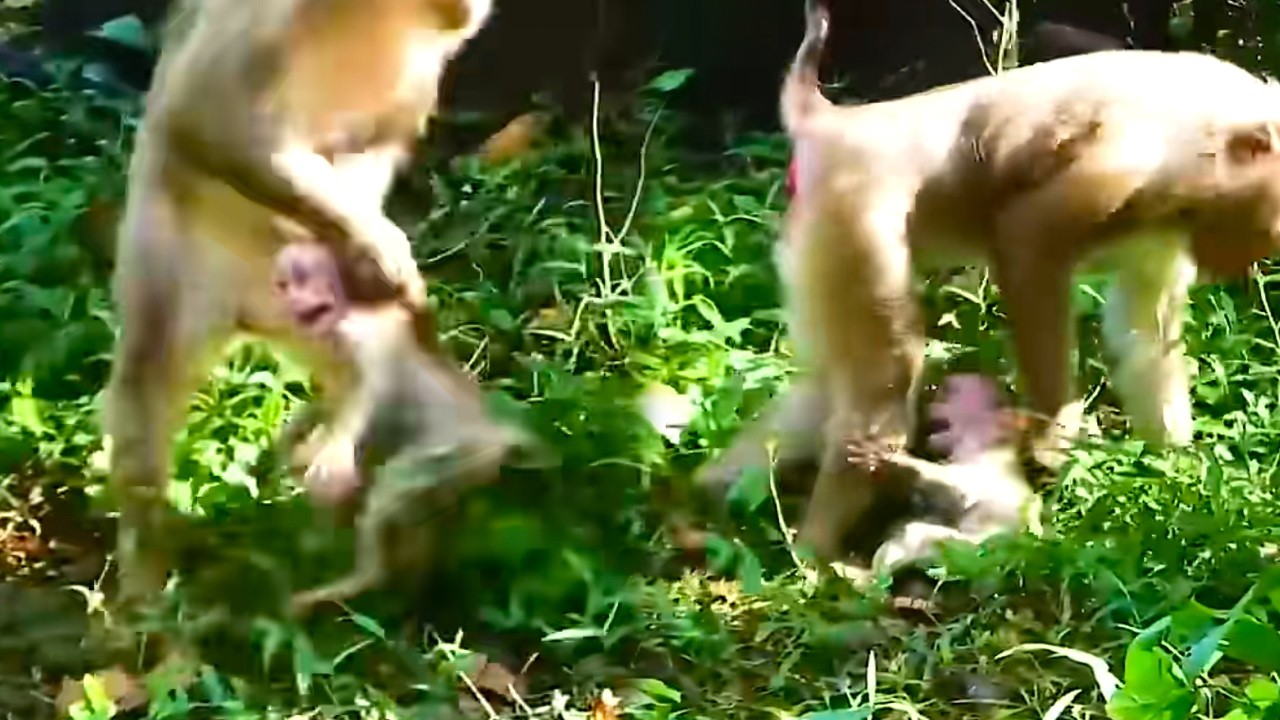
Watch the original video →