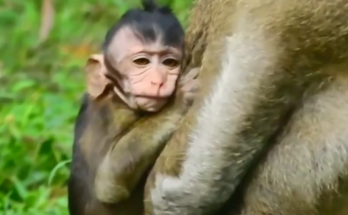
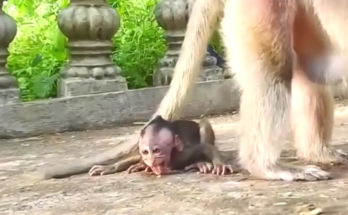
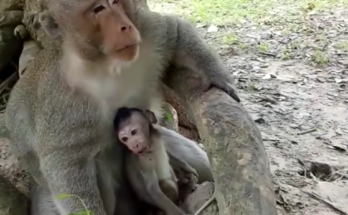
In the dense, humid forests of Southeast Asia, life moves fast and rarely pauses for the vulnerable. When a baby macaque was found bearing serious injuries, observers watching closely were left with one quiet, pressing question: would this tiny creature ever fully recover?
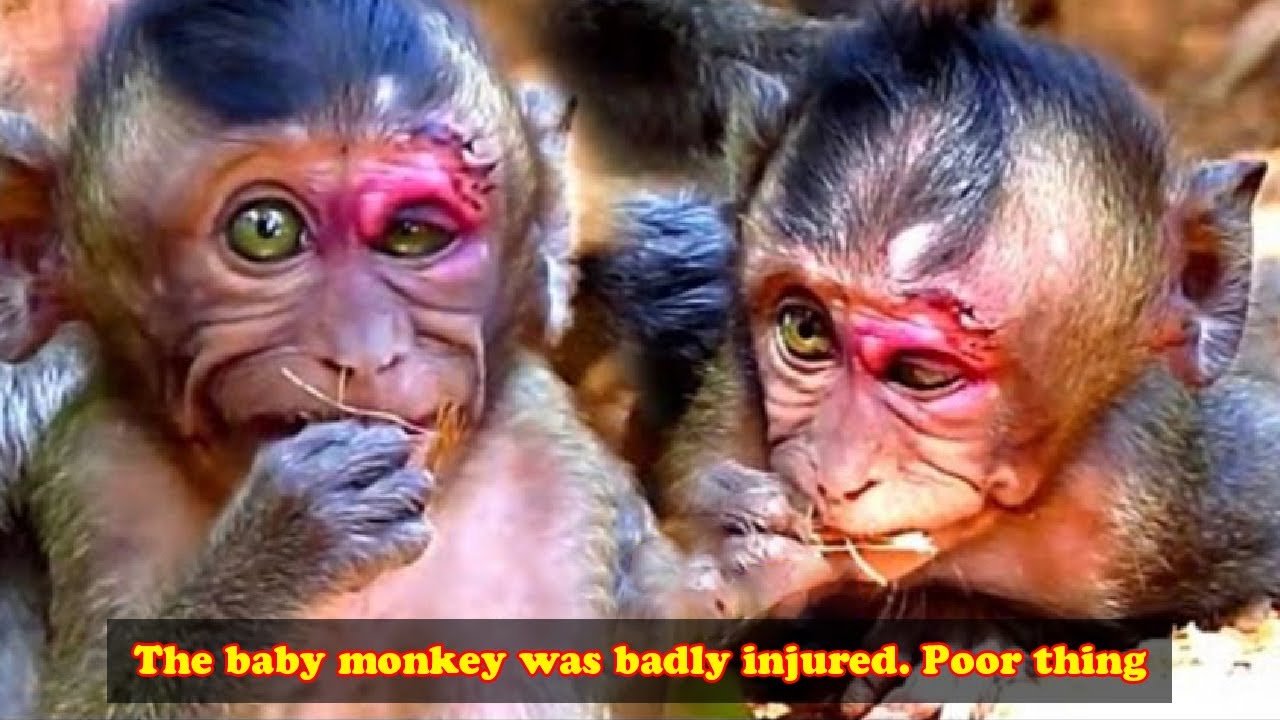
The young monkey, documented by the Asian Macaques channel on YouTube, appeared visibly distressed. Its small frame, ordinarily full of the restless energy that defines juvenile macaques, was subdued. The injuries were apparent enough to draw sustained attention from those filming, their cameras capturing each cautious movement the infant made as it navigated a world that had, in a very short time, become far more difficult to move through.
Baby macaques are among the most dependent of all primate infants. In their earliest weeks and months, they cling almost constantly to their mothers, drawing not only nutrition but also warmth, protection, and the social learning that will define their adult behavior. An injury at this stage is not simply a physical setback — it disrupts an entire developmental process that cannot easily be rewound.
What makes this particular case so affecting is the visibility of the struggle. The footage shows the infant attempting to move, to interact, to simply exist within its social group, all while carrying the weight of wounds that would test an animal far larger and more experienced. Other members of the troop moved around it, the ordinary rhythms of macaque life continuing, indifferent to the fragility in their midst.
Veterinarians and wildlife observers who study macaque populations note that young primates possess a remarkable, if fragile, capacity for recovery. When injuries are not catastrophic and when the animal remains within its social group — protected, groomed, and fed — the prognosis can, in time, improve. Social bonds are not merely emotional comforts for macaques; they are survival infrastructure.
The critical variables are many: the precise nature of the injuries, the response of the infant’s mother, the availability of food, and the absence of further threat. In the wild, none of these factors are guaranteed. A troop may move on. A mother may be unable to carry an injured infant across difficult terrain. Predators do not observe recovery periods.
And yet, nature also writes stories of persistence. Wildlife footage from across Southeast Asia has, on more than one occasion, captured injured juvenile macaques who survived against reasonable expectation, growing slowly into functional members of their social groups. The body, given time and stability, can close wounds that once looked permanent.
Whether this baby monkey would be among those survivors remained, at the time of filming, an open question — one answered not in a single moment but across many quiet days in the forest, each one either adding to or subtracting from the small creature’s chances.
Source: Asian Macaques, YouTube (https://www.youtube.com/watch?v=VkybIfU6938)
Watch the original video →