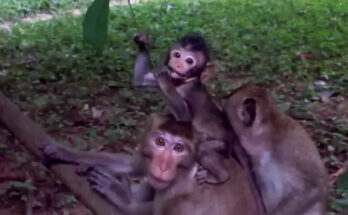
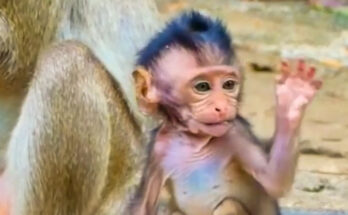
Long before a camera arrived, before a name was given, before any audience watched — there was a troop. A living, breathing social structure of primates moving through their habitat, raising their young, forming alliances, and navigating the daily challenges of survival. This is the world that baby monkey Binya was born into, and it is a world far more complex than it might first appear.
The Troop as a World
Primate troops are not simply groups of animals travelling together for safety. They are layered social communities with hierarchies, relationships, disputes, and bonds that can last a lifetime. For an infant monkey, the troop is everything — the source of food, protection, warmth, and learning. A baby primate without the support of its mother and troop has virtually no chance of survival in the wild.
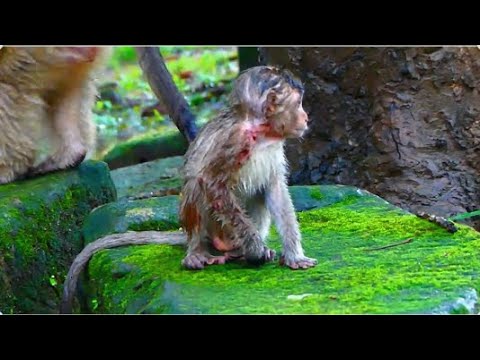
The Animals 4K channel, through its ongoing documentation of primates in natural settings, has brought this world into vivid focus for a global audience. Their video centred on baby monkey Binya — capturing events following her death — sits within a much longer story of troop life, one that the channel has been recording with patience and care.
Infant Vulnerability and Troop Response
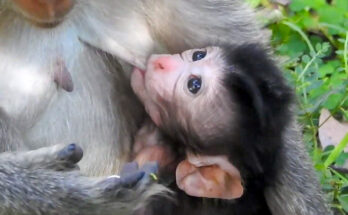
The first months of a monkey’s life are defined by closeness. Infants cling to their mothers almost continuously, nursing frequently and observing the world from the safety of their mother’s body. Older troop members — siblings, aunts, and occasionally even unrelated females — may show interest in the infant, and this social attention is itself a form of learning and bonding.
But vulnerability is ever-present. Infant mortality in wild primate populations can be significant, influenced by disease, predation, environmental conditions, and the health of the mother. When an infant dies, the response within the troop can be striking. Primatologists have documented cases across multiple species — including macaques, baboons, gorillas, and chimpanzees — where mothers carry deceased infants for days or even weeks. This behaviour is now widely understood as a form of grief processing, a biological and emotional response to loss that reflects the depth of the maternal bond.
What Documentation Reveals
Wildlife videographers who choose to document these moments, rather than looking away, provide something genuinely valuable: a record of the full spectrum of animal experience. The Animals 4K channel, in choosing to film and share footage related to Binya’s passing, contributes to a broader cultural understanding that animals are not simply animated scenery — they are beings with bonds, vulnerabilities, and stories.
Shot in 4K resolution, the footage brings a level of visual intimacy that earlier generations of wildlife filmmakers could only dream of. Viewers can see the texture of fur, the expressions in eyes, the weight of a mother’s posture. These details matter. They close the distance between human observer and animal subject in ways that transform passive viewing into genuine connection.
A Broader Story in Every Frame
Binya’s story is, in many ways, a story about context. She did not exist in isolation. She was born into a community, dependent on relationships, shaped by the rhythms of a world that predates human observation by millions of years. Her passing is one moment within a much larger, ongoing story of primate life — a story of resilience, social complexity, and the enduring power of the bonds that hold a troop together.
In documenting that moment, Animals 4K reminds their audience that every frame of wildlife footage carries a world within it, if you know how to look.
Source: Animals 4K, YouTube channel. Video title: Poor Baby Monkey Binya After Di_/e…..! Animals 4K.
Watch the original video →