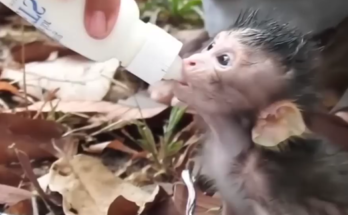
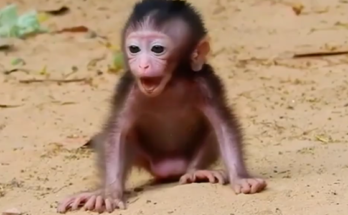
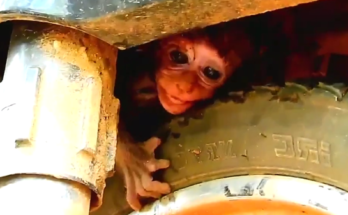
Somewhere among a tumble of weathered stone, a small cat with oversized paws and tufted ears found itself in serious trouble. The baby lynx — likely only weeks old — had slipped into a narrow gap between rocks and could not get out. Its predicament, recorded on video and shared by the YouTube channel Short Show-Daily, is a stark illustration of a truth that governs life for every young predator born into the wild: the world is not designed to be gentle to the small.
Born Into a Demanding Landscape
Lynx are creatures of rugged places. Depending on the species — the Eurasian lynx, the Canadian lynx, the Iberian lynx, or the bobcat — they inhabit boreal forests, mountainous regions, scrublands, and rocky terrain across the Northern Hemisphere. These are landscapes defined by extremes: harsh winters, uneven ground, dense undergrowth, and geological features that can shift and settle unpredictably.
For an adult lynx, this terrain is home. Their large, snowshoe-like paws give them traction on snow and loose ground. Their powerful hind legs allow them to leap across gaps and scale slopes with apparent ease. Their solitary nature means they know their territory intimately — every ridge, every fallen tree, every safe passage through the rocks.
But a kitten doesn’t have any of these advantages yet.
The Vulnerable First Months
Lynx kittens are born blind and helpless, typically in litters of one to four. They depend entirely on their mother for warmth, food, and protection during their first weeks of life. The den — often tucked beneath a rock overhang, inside a hollow log, or within dense brush — is their entire world during this initial period.
As they grow, kittens begin to explore. Their eyes open, their legs strengthen, and their natural curiosity drives them to investigate their surroundings. This exploratory phase is critical for development. It teaches young lynx about the terrain they will eventually need to navigate as independent hunters. But it also exposes them to hazards that their still-developing bodies are not equipped to handle.
Rocky crevices, steep drops, bodies of water, and encounters with larger animals all pose threats. The video shared by Short Show-Daily captures one such hazard in real time: a kitten that ventured into a gap between rocks and found itself unable to reverse course.
Why Rock Formations Pose a Specific Risk
The geology of lynx habitat often includes exposed rock faces, boulder fields, and fractured stone formations. These features provide shelter and denning sites for adult lynx and other wildlife. However, for a kitten whose spatial awareness and physical strength are still developing, these same features can become traps.
A narrow opening that a kitten can squeeze into may taper further inside, preventing the animal from turning around. The smooth surfaces of certain rock types offer little grip for small claws. And unlike soft soil or vegetation, rock does not give way — once an animal is wedged in, the only way out is backward, forward, or with outside help.
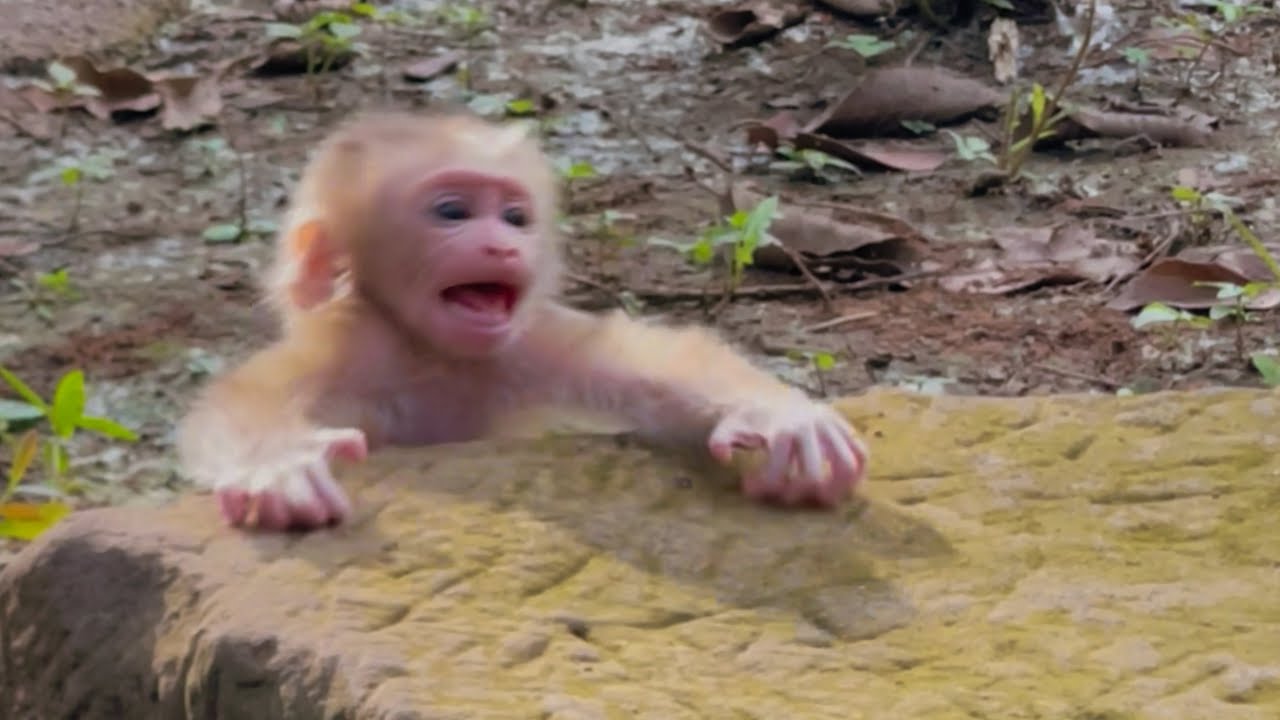
In the video, the baby lynx appears to be experiencing exactly this scenario. Its body is pressed between stone surfaces, and its attempts to free itself are visibly unsuccessful. The kitten vocalizes — a behavior that, in the wild, would serve to alert its mother to its location and distress.
Survival in Context
Mortality rates among young lynx are significant. Studies on various lynx populations suggest that a substantial percentage of kittens do not survive their first year. Starvation during lean prey years, predation by larger carnivores, exposure to extreme weather, and accidents like the one captured in this video all contribute to that figure.
This is not a reason for despair but rather a context for understanding. The natural world operates on probabilities, and every lynx that reaches adulthood has navigated a gauntlet of challenges that began the moment it first opened its eyes. The trapped kitten in this video is living through one of those challenges — a small, specific moment in the much larger story of what it means to grow up wild.
Whether this particular kitten was freed by the person behind the camera or eventually managed to escape on its own, its story reflects the broader reality faced by young lynx across their range. Curiosity is essential for survival, but it comes with a cost — and sometimes, that cost is measured in the narrow space between two immovable rocks.
Source: “Oh god Help// Baby Lynx stuck from a rock” — Short Show-Daily, YouTube (https://www.youtube.com/watch?v=RezbdmaN_-A)
Watch the original video →