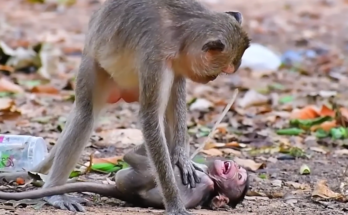
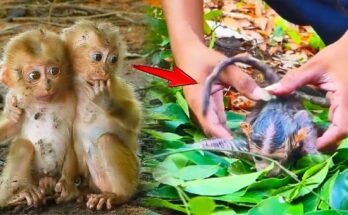
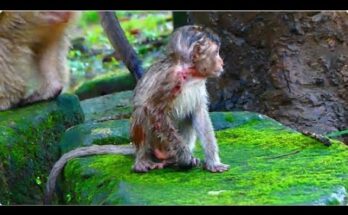
Somewhere in a macaque colony — where hierarchies are negotiated daily through grooming, posture, and proximity — a mother sits with her baby nearby. The infant scrambles toward her, reaching for milk. She intercepts the attempt, gently but firmly redirecting the small body away from her chest. The baby circles back. She blocks again. This exchange repeats several times, each iteration a quiet chapter in a much larger story.
The video, shared by the YouTube channel Top Macaques, offers a window not just into one mother-infant interaction, but into the broader world of macaque social life — a world governed by instinct, learned behavior, and the constant balancing act of survival.
The Social World of Macaques
Macaques are among the most widely distributed and well-studied primates on the planet. Found across Asia and parts of North Africa, they live in multi-generational groups that can number from a few dozen to several hundred individuals. Within these groups, social bonds are everything. Relationships between mothers and infants, between siblings, between dominant and subordinate individuals — all of these connections shape daily life.
For a baby macaque, the mother is the center of the universe. In the earliest weeks and months of life, the infant clings to her almost constantly, nursing on demand and relying on her for warmth, protection, and transportation. But this period of total dependence does not last forever. At some point, every macaque mother begins the process of encouraging her baby to become more self-sufficient.
The Weaning Process in Context
The behavior captured in the Top Macaques video — a mother repeatedly preventing her baby from nursing — is consistent with what primatologists describe as the weaning conflict. This is a well-documented phase in macaque development in which the interests of mother and infant temporarily diverge.
The infant, still motivated by the comfort and nutrition of milk, wants to continue nursing. The mother, whose body is signaling that it is time to reduce lactation, begins to restrict access. The result is a period of negotiation that can look, to the untrained eye, like rejection.
But context matters enormously. In macaque colonies, weaning does not happen in isolation. It occurs within a social environment where the infant has access to other food sources, other group members for socialization, and its mother for non-nursing comfort. The baby in this video, despite being denied milk, remains physically close to its mother throughout the footage — a sign that the bond between them is intact even as the feeding relationship changes.
Colony Life and Maternal Strategy
Understanding this behavior requires stepping back and looking at the bigger picture of macaque colony dynamics. Mothers in these groups are not making decisions in a vacuum. Their behavior is influenced by their rank within the group, the availability of resources, the number of offspring they have already raised, and their own physical condition.
A mother who weans her infant at the appropriate time frees up metabolic resources that can be directed toward her own health and, eventually, toward the production of another offspring. In evolutionary terms, this is not a failure of care — it is a strategy for maximizing the number of surviving descendants over a lifetime.
The baby, meanwhile, is being pushed toward a critical developmental milestone. Learning to eat solid food, to navigate the colony’s social landscape without constant maternal intervention, and to manage frustration are all skills that a young macaque will need as it matures.
What Viewers See Versus What Is Happening
One of the challenges of wildlife videos shared online is that they strip behavior of its context. A clip of a mother refusing milk to a crying baby, presented without explanation, can generate outrage or sadness. But when that same clip is understood within the framework of macaque biology and social structure, it becomes something different entirely — a portrait of normal, healthy development.
The Top Macaques channel, which regularly documents the daily lives of macaque groups, provides viewers with the opportunity to observe these interactions firsthand. Videos like this one serve as a reminder that the natural world operates on its own logic — one that does not always align with human expectations but makes profound sense within its own context.
The mother in this video is not being cruel. She is being a macaque mother, doing exactly what millions of years of evolution have prepared her to do.
Source: “The baby monkey asked for milk many times but was ruthlessly stopped by the mother monkey” — Top Macaques, YouTube (watch here)
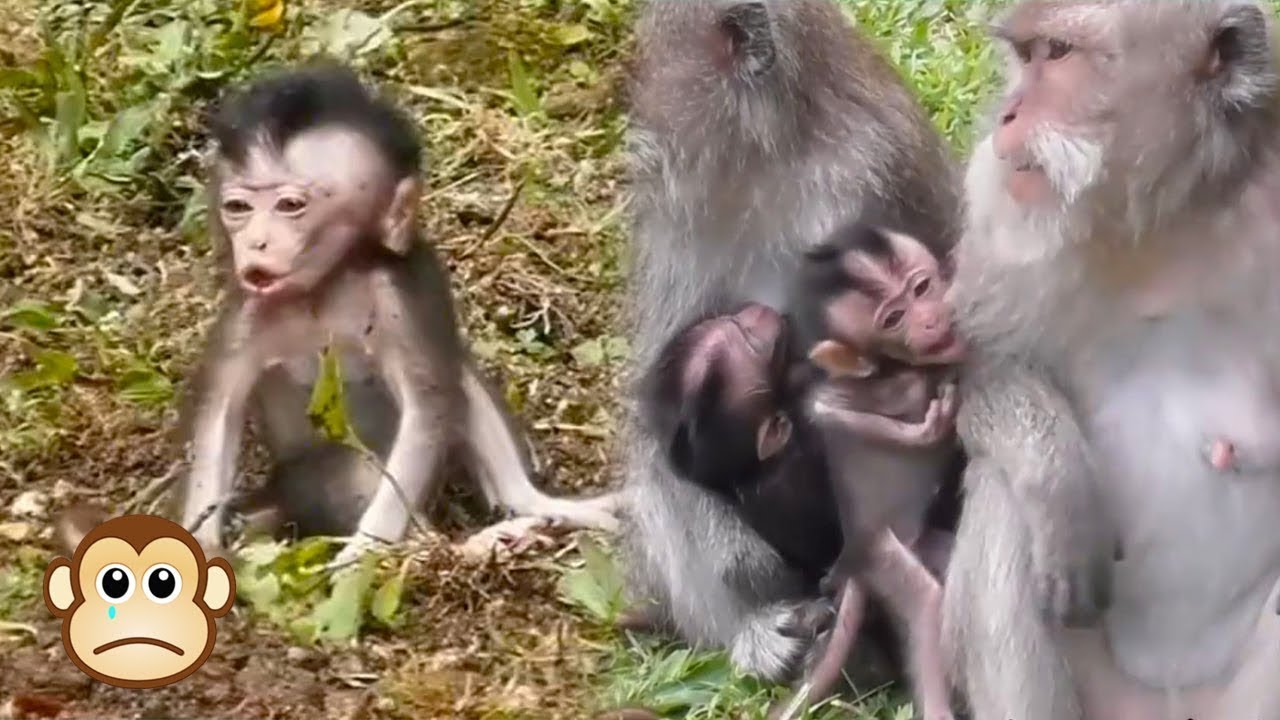
Watch the original video →