The stone corridors of Angkor Wat had just caught the first pale light of morning when I noticed Milina had stopped moving.
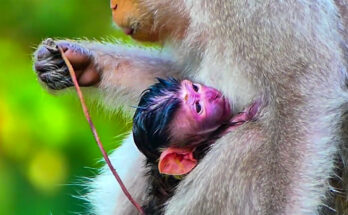
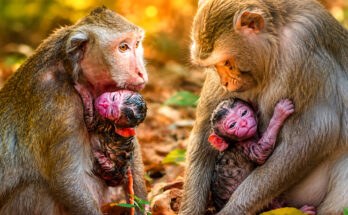
She was sitting on a low mossy wall at the edge of the forest, tucked just far enough from the trail that most visitors would have walked right past her. But I stopped. Because in her arms — curled tight against her chest — was something I hadn’t seen before. Something tiny. Pink-fingered and trembling with newness.
Her baby had arrived.
I don’t know exactly when it happened. These things rarely announce themselves. But by the quiet, deliberate way Milina sat — barely breathing, it seemed — I could tell it hadn’t been long. She held the infant with both hands pressed gently against its back, her fingers spread wide as if she were afraid it might slip. The baby’s face was pressed into the warmth of her fur, eyes shut, mouth working in tiny, rhythmic pulses.
For a long time, neither of them moved.
The rest of the troop carried on around them — juveniles chasing each other through the banyan roots, older females grooming in pairs — but there was a kind of invisible boundary around Milina. Nobody crowded her. Even the boldest young males kept their distance. There’s an unspoken understanding in a macaque troop: this moment belongs to the mother.
What struck me most wasn’t the tenderness, though that was impossible to miss. It was the focus. Milina’s eyes moved constantly — scanning the canopy, tracking movement on the path below — while her hands never left her baby. Every few minutes she would lower her nose to the infant’s head and breathe slowly, as if memorizing a scent she would never be allowed to forget.
I’ve spent a lot of time in this forest. I’ve watched these animals through monsoon seasons and dry spells, through territorial disputes and fruit shortages. But a first-time mother in those early hours — that’s something different. That’s something that doesn’t require any explanation.
The baby stirred once. A small, uncertain sound, somewhere between a squeak and a sigh. Milina pulled it closer without looking down. She already knew.
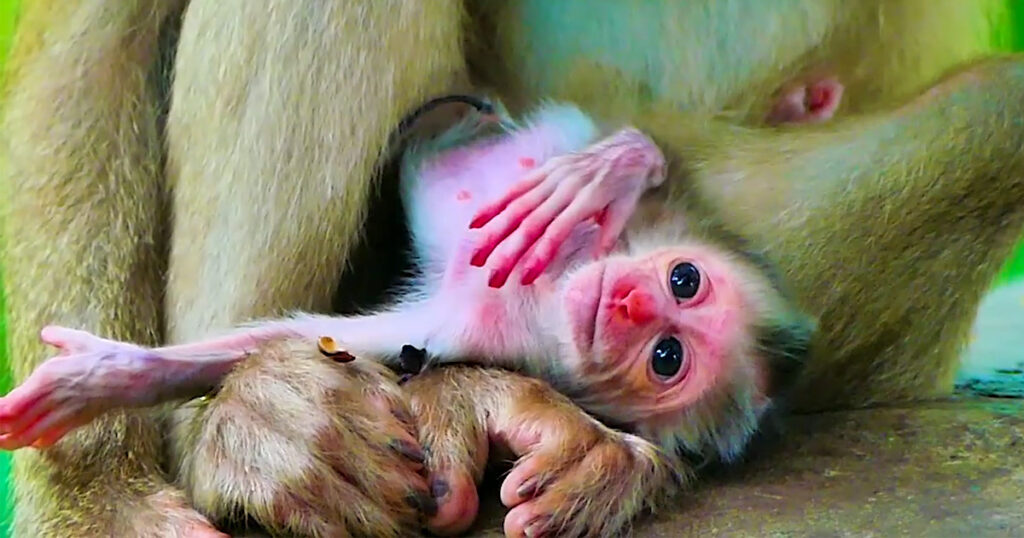
By midmorning, the infant had found its footing — or rather, its grip. Tiny fingers locked around Milina’s fur with a determination that seemed almost comical given its size. It wouldn’t let go. And Milina, for her part, showed no sign of wanting it to.
Some things don’t need a translation. Love that looks like holding on — that’s universal.