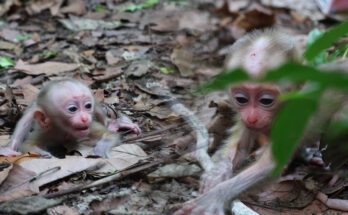
There’s a particular stillness that settles over the stone corridors of Angkor Wat just before the afternoon rain arrives. The air thickens. The trees go quiet. And if you’re patient enough to wait it out, you’ll sometimes witness something that feels almost too personal to watch.
That’s how I found Niko.
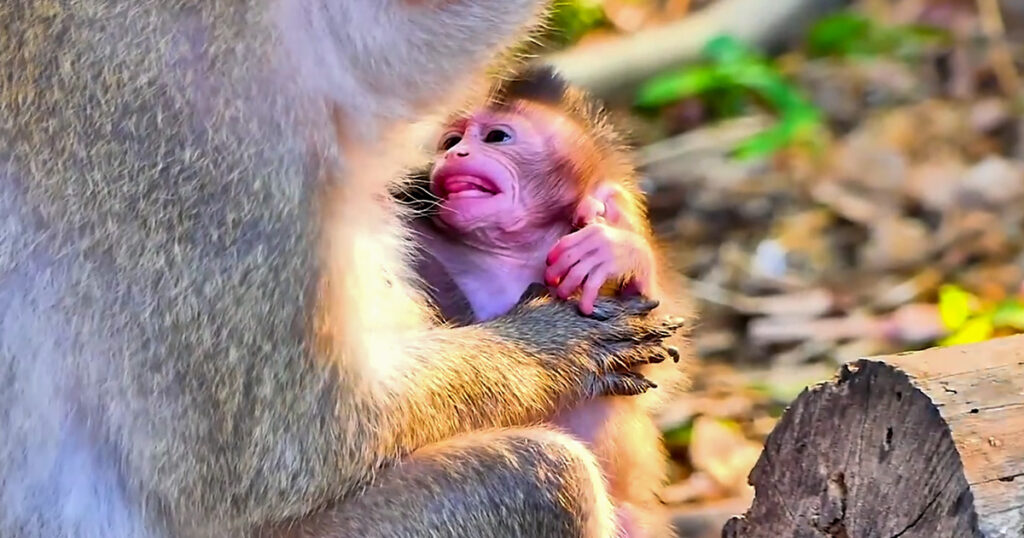
He couldn’t have been more than six weeks old — a tiny tangle of limbs and wide dark eyes, clinging to his mother’s chest as the first drops began to fall through the canopy above. His mother, a mid-ranked female in the troop I’ve been following for months, shifted her weight and pressed herself beneath the overhang of a crumbling sandstone wall. She moved with the quiet efficiency of a mother who has done this before.
But Niko wasn’t settled. He squirmed, stretched one small arm upward, and let out a thin, reedy cry — the kind that carries even through rain. He wasn’t afraid. He was hungry.
His mother glanced down at him. There was no frustration in her posture, just a slight adjustment — she repositioned him firmly against her body, tucking him in close, her arm curved around his back like a shelter. He rooted instinctively, found what he was looking for, and went quiet.
For a long moment, the only sounds were the rain on the leaves and the distant murmur of tourists on the main causeway, completely unaware of what was happening just thirty meters into the tree line.
I’ve spent years watching long-tailed macaques here. I’ve seen dominance disputes, I’ve seen young males posture and back down, I’ve seen troops move like water through the ruins. But the moments that stay with me are always the quiet ones — a mother in the rain, holding her infant against the cold, making him feel like the world is not so large or frightening.
Niko fell asleep before the rain stopped. His mother didn’t move for another twenty minutes.
She didn’t have to. She already had everything that mattered.