The morning light was still soft when I noticed her.
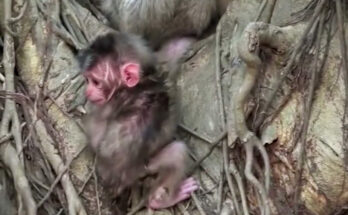
She was sitting at the base of one of the old stone walls near the southern causeway of Angkor Wat, half-hidden beneath the roots of a strangler fig that had been slowly reclaiming the sandstone for centuries. She was maybe eight months old — still carrying the orange birth coat that had begun to fade at the edges into the pale gray of an older juvenile. Her name, as the regulars in the troop had come to recognize her, was small and unmistakable: she was always the loudest one.
Today was no exception.
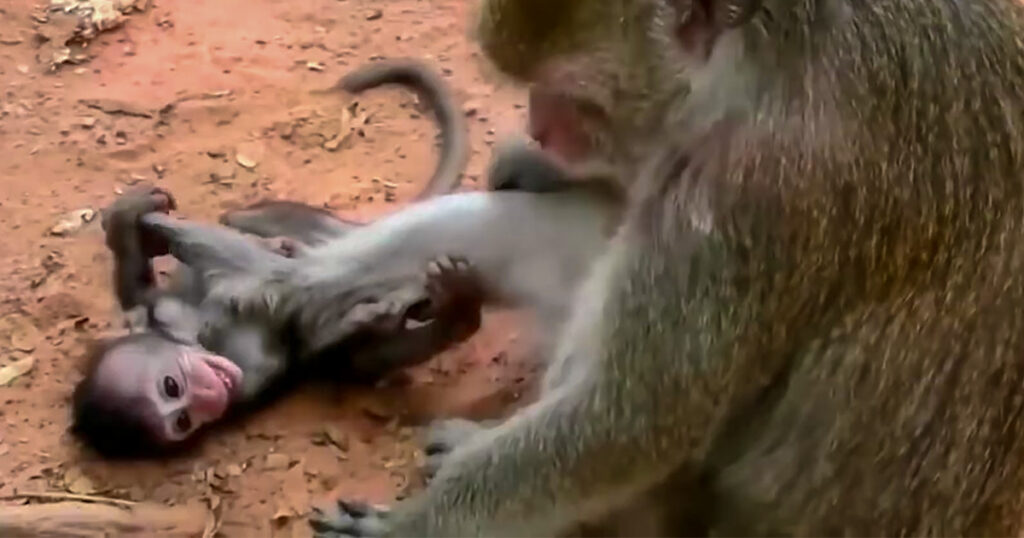
Her mother, a confident, mid-ranking female in the troop, had simply turned her back. No warning. No slow withdrawal. She had shifted her weight, angled her shoulder, and made herself unavailable. The infant reached, scrabbled, and found nothing. What followed was the sound that stops tourists mid-step.
It was not aggression. It was not danger. It was the pure, unfiltered cry of an animal who does not yet understand that the world is changing.
The mother sat still. She groomed her own forearm slowly, deliberately, the way a person might occupy their hands during a difficult conversation. The baby circled her twice, pressed its face against her back, and cried harder. A few juveniles nearby looked up, assessed the situation, and went back to foraging. This was not news to them.
What struck me most was how the mother never moved away. She stayed close. She simply closed herself off — present but unavailable, firm but not unkind. After about twelve minutes, the infant went quiet. She climbed up, settled beside her mother, and began picking through the leaf litter.
Weaning in long-tailed macaques is not a single event. It is a negotiation that can stretch across weeks, carried out in these small, charged moments — moments that look like heartbreak but are, in the language of the forest, a form of teaching.
The stone walls of Angkor were built to last thousands of years. Some lessons, it seems, are just as old.