Ask someone what they feel when they watch a baby animal die on screen, and most will tell you — without hesitation — that it hurts. Not in an abstract way. In a real, chest-tightening, why-am-I-watching-this way. And yet they keep watching. That tension, between the impulse to look away and the deeper instinct to bear witness, sits at the heart of why wildlife footage like that produced by Animals 4K resonates so profoundly.
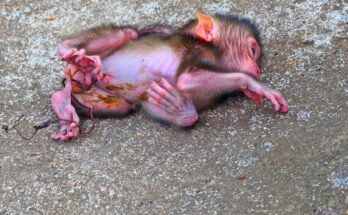
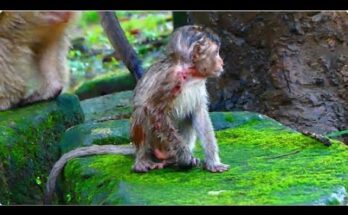
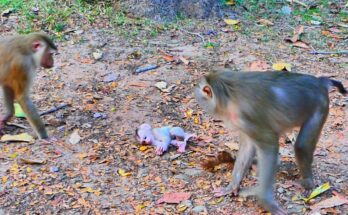
The channel’s recent video documenting the death of a young monkey named Binya has prompted exactly that response from its audience. It is uncomfortable viewing, in the way that honest things often are. But its impact extends well beyond a single video.
The Power of a Name
There is a reason wildlife researchers give individual animals names rather than numbers alone. It changes things — not in the field, necessarily, but in the minds of those who follow the research. Named animals become individuals. Individuals become subjects of genuine concern. Concern, over time, becomes advocacy.
Binya was a named baby monkey, and that single act of identification transformed her from background wildlife into a character in a story her audience genuinely cared about. When that story ended, the loss was felt not as an abstraction but as something personal.
This is not a trivial observation. Conservation organisations have long understood that public engagement with wildlife depends less on statistics about species decline and more on the emotional reality of individual animals. The fate of one named creature, documented with care and consistency, can do more to shift attitudes than any number of graphs or reports.
Grief Across the Species Divide
The footage from Animals 4K also invites a broader reflection on what we understand about animal emotional life. Primatologists including the late Dr. Jane Goodall have spent decades arguing — with mounting evidence — that primates experience something meaningfully similar to human grief. Troops slow. Mothers hold on. A particular quality of silence descends.
For audiences watching Binya’s story unfold in high definition, these behaviours are not abstractions from a scientific paper. They are visible, immediate, and recognisable. The empathy they generate is itself significant — it suggests that the emotional gap between human observers and the animals they watch may be narrower than we routinely assume.
A Generation Learning to Watch
Platforms like YouTube have quietly transformed the relationship between ordinary people and wildlife. Where previous generations might encounter nature through scheduled television documentaries, today’s audiences can follow individual animals across months and years of continuous observation. They form relationships — not with species, but with specific creatures in specific places.
Animals 4K has built an audience around precisely this kind of longitudinal attention. The channel’s commitment to 4K documentation of primate groups creates a record of individual lives that has genuine value — both as entertainment and as informal natural history.
The death of Binya, sad as it is, contributes to that record honestly. It resists the temptation to edit reality into something more comfortable. In doing so, it asks its audience to extend their empathy into difficult territory — and suggests that doing so might make them more thoughtful about the wider world those animals inhabit.
That, perhaps, is the most significant impact of footage like this. Not the view count. Not the comments. But the quiet shift in perspective that happens when a person allows themselves to genuinely mourn a monkey they never met — and wonders, for the first time, what else they might have been missing.
Source: Animals 4K, YouTube channel dedicated to high-definition wildlife and primate behaviour documentation.
Watch the original video →