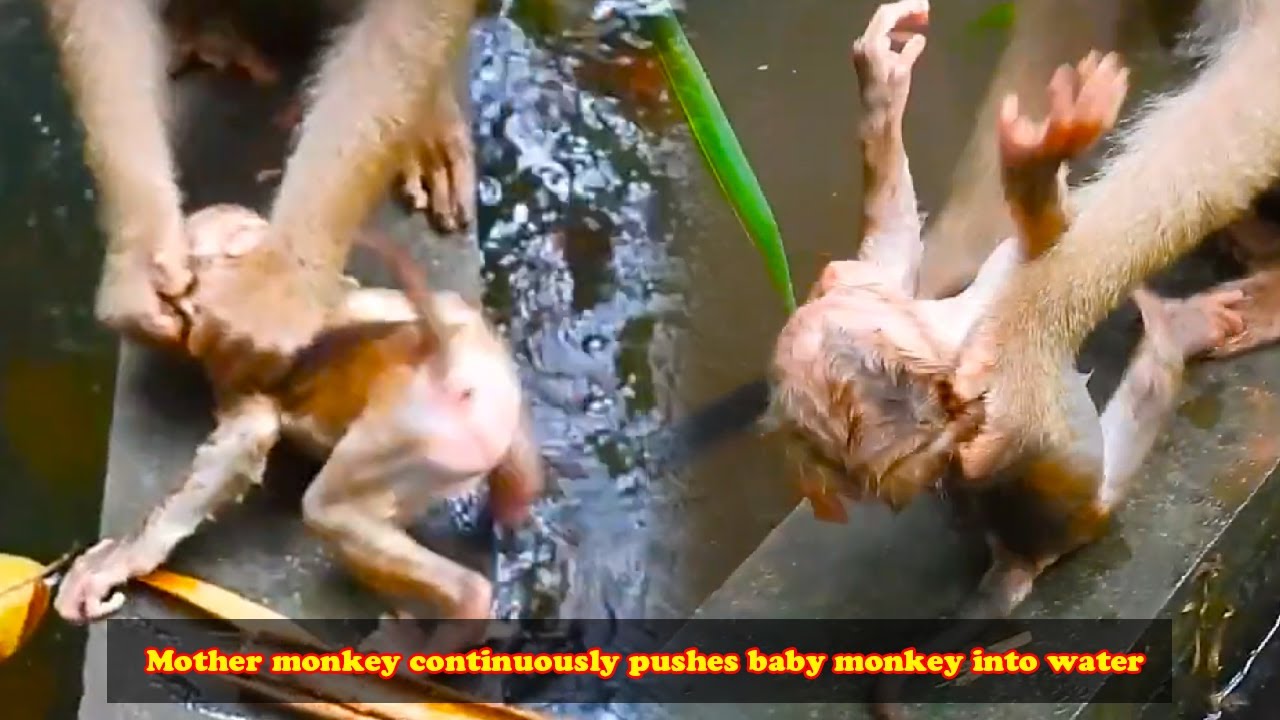
There is a moment in the video that feels almost universally familiar. A small, reluctant child edges toward water. A parent stands behind, firm and unyielding. And then — the push. Except in this case, the parent is a macaque monkey named Libby, and the child is her young son, Leo. And the push happens not once, but repeatedly.
A Scene That Resonates
The footage, shared by the YouTube channel Asian Macaques, documents a seemingly simple interaction: a mother monkey pushing her offspring into a pool. But the reason the video resonates with so many viewers goes beyond novelty. It taps into something deeply recognizable — the universal dynamic between a parent who insists and a child who resists.
Anyone who has ever coaxed a reluctant toddler into a swimming pool, urged a nervous child onto a bicycle, or nudged a teenager toward an uncomfortable but necessary experience may see something of themselves in Libby. Her persistence is striking. Leo climbs out; she pushes him back in. He tries to avoid the edge; she guides him right back to it. The pattern repeats with a determination that viewers find both entertaining and strangely relatable.
Why Animal Behavior Content Connects
Videos like this one succeed not because they are sensational, but because they are authentic. The footage is candid and unscripted. There is no voiceover telling the viewer what to feel. There is simply a mother monkey and her son, engaged in an interaction that viewers can observe and interpret for themselves.
This kind of content occupies a particular space in online media. It is accessible without being frivolous. It invites curiosity without demanding expertise. A primatologist might watch the video and analyze the behavior in terms of macaque social learning. A parent might watch it and laugh in recognition. A casual viewer might simply find it entertaining. Each perspective is valid, and the video accommodates all of them.
The Power of Named Characters
Part of what makes the Asian Macaques channel effective in reaching audiences is its practice of identifying individual monkeys by name. Libby is not just “a monkey” — she is Libby, a mother with a recognizable personality and a specific relationship with her son. Leo is not just “a baby macaque” — he is Leo, a young monkey with his own apparent preferences and reactions.
This naming convention transforms anonymous wildlife footage into something closer to a character-driven story. Viewers can follow individuals over time, tracking their development and relationships. It creates investment, which in turn creates a loyal audience.
What the Video Actually Shows
It is important to be precise about what the footage documents. Libby pushes Leo into the pool multiple times. Leo appears to resist and attempts to avoid the water. The interaction is physical and repetitive. Beyond these observable facts, the video does not provide definitive insight into Libby’s motivations or Leo’s emotional state.
Viewers are free to speculate — and many do. Some suggest Libby is teaching Leo to swim. Others wonder if it is a form of discipline or play. Still others caution against projecting human emotions onto animal behavior. The video itself remains neutral, offering raw footage without editorial commentary.
A Mirror Worth Looking Into
What gives this footage its staying power is not spectacle but recognition. In Libby’s firm pushes and Leo’s flailing resistance, viewers see a reflection of a dynamic as old as parenthood itself. The species is different, but the push-and-pull — literal in this case — feels timeless.
And perhaps that is why people keep watching. Not because the video is shocking or extraordinary, but because it is ordinary in the most profound sense. A mother pushes. A child resists. And life, in all its stubborn, splashing chaos, goes on.
Source: “Mother monkey Libby keeps pushing her son Leo into the pool” — Asian Macaques, YouTube. Video URL: https://www.youtube.com/watch?v=7S_Pe1CEGg0
Watch the original video →