The morning light filtered gently through the ancient trees surrounding Angkor Wat. I had been sitting quietly along the stone pathway, listening to the soft rustle of leaves and distant bird calls, when I noticed them.
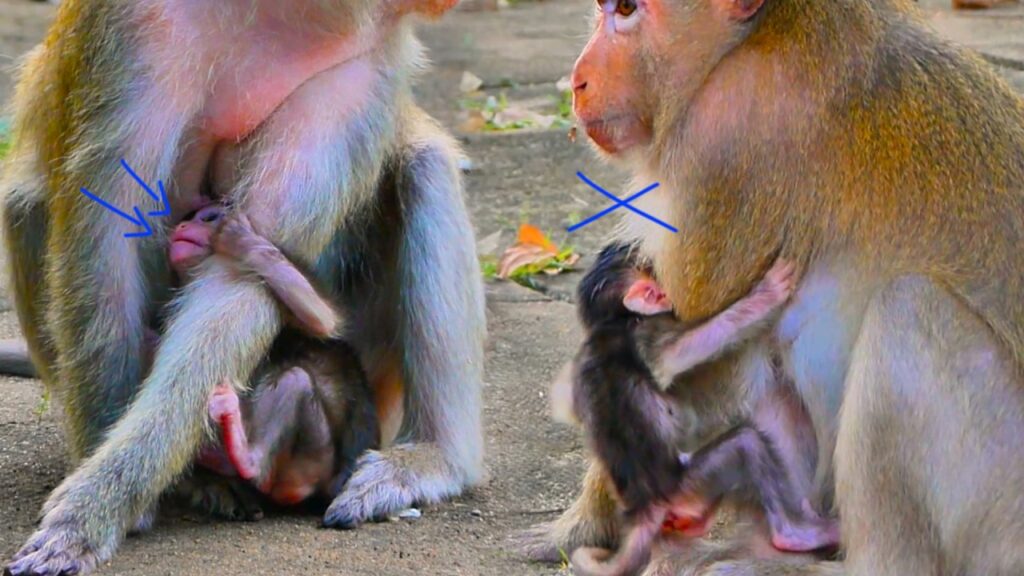
An older mother monkey perched on a moss-covered ledge, her tiny newborn clinging tightly to her chest. The baby’s movements were small but urgent—nudging, searching, trying to nurse. But each time the infant tried to latch on, the mother shifted away.
At first, it felt confusing to watch.
The newborn’s little hands trembled with effort. It pressed its face against her fur again and again. In the stillness of the forest, the moment felt amplified. A tug. A pause. A gentle push away.
As a parent, it stirred something deeply familiar in me. That instinct to protect. To provide. To respond instantly to a baby’s need. And yet here was this mother, hesitating.
But the longer I observed, the more I realized something important: she wasn’t rejecting her baby. She was watching everything around her.
The forest was active that morning. Other monkeys moved in nearby trees. A younger male lingered too close. The mother’s body remained tense, alert. Every time her baby tried to nurse, she adjusted her position—angling her back toward potential movement, shielding the infant beneath her arm.
It wasn’t refusal.
It was vigilance.
Eventually, when the surroundings settled, she allowed the baby to nurse. The newborn relaxed almost instantly, tiny fingers uncurling into her fur. The mother softened too, lowering her shoulders, closing her eyes briefly as if releasing a breath she had been holding.
Watching that moment unfold felt deeply human.
In the wild, motherhood carries layers we don’t always understand at first glance. Protection sometimes looks like distance. Caution can look like coldness. But survival shapes behavior in ways that are easy to misread.
Standing there in the Angkor Wat forest, I realized how often we project our own expectations onto the animal world. What appeared at first to be withholding was actually awareness. What felt like tension was responsibility.
The baby stayed close the rest of the morning. And the mother, though alert, never let the infant drift far from her chest.
It was a quiet reminder: love doesn’t always look gentle. Sometimes it looks watchful. Sometimes it looks firm. But it is there.
And in that ancient forest, beneath centuries-old stone towers, a small family carried on—careful, connected, and resilient.