The morning began the way most do in the forests surrounding Angkor Wat—soft humidity rising from the stone pathways, young monkeys tumbling near the ruins, older members grooming in patches of filtered sunlight.
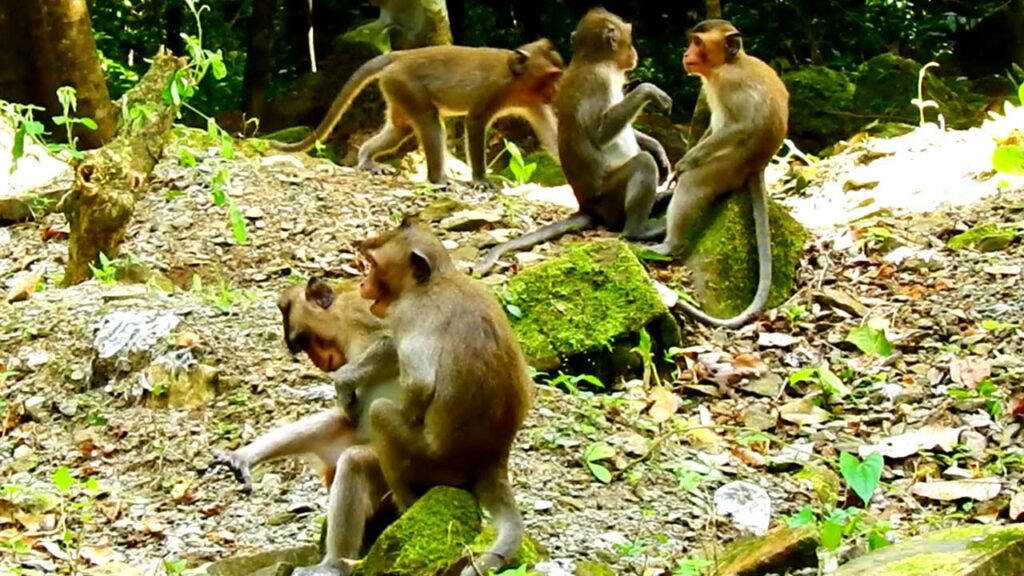
Amber Troop was settled.
Until it wasn’t.
It started with one male—restless, pacing along the temple wall. I had noticed him before. Larger than most, easily irritated when food was scarce or when younger monkeys drifted too close.
That morning, the tension in his movements felt heavier.
When a smaller juvenile reached toward a fallen fruit, the larger monkey lunged. The reaction was swift. Screeches cut through the air. Mothers grabbed their infants. Several monkeys scattered up nearby trees.
The forest, so calm seconds earlier, shifted into confusion.
In American neighborhoods, we understand how quickly one person’s frustration can ripple through a family or a community. One raised voice at a dinner table. One heated moment at work. The emotional temperature changes instantly.
That’s what it felt like.
The larger monkey didn’t just assert dominance—he chased, swatted, and disrupted grooming pairs that had nothing to do with the original disagreement. Anxiety spread faster than the conflict itself.
But what struck me most wasn’t the aggression.
It was the response.
An older female—steady, respected—positioned herself between the aggressor and the juveniles. She didn’t attack. She simply held her ground. Others began regrouping around her.
Slowly, the troop reorganized.
The aggressor’s energy lost momentum. Without reaction, without escalation, his outburst began to dissolve into restless pacing instead of chaos.
Within minutes, the forest sounds returned to normal. Leaves rustled again. Grooming resumed. A baby monkey peeked from behind its mother’s arm.
Peace doesn’t always shatter loudly. And it doesn’t always return dramatically either.
It settles back in quietly—through steady presence, not force.
Watching that morning unfold beneath ancient temple towers felt unexpectedly familiar. Families in the U.S. know the emotional toll of one dominant personality disrupting the room. But they also understand the quiet strength it takes to steady things again.
Amber Troop didn’t fall apart.
They absorbed the shock. They recalibrated.
And by afternoon, the stones of Angkor Wat held only sunlight and silence again—as if the forest itself had exhaled.