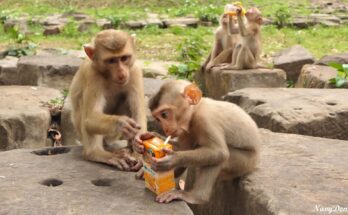
The morning sun had just begun warming the stones of Angkor Wat when the young monkeys burst into their usual game of chase.
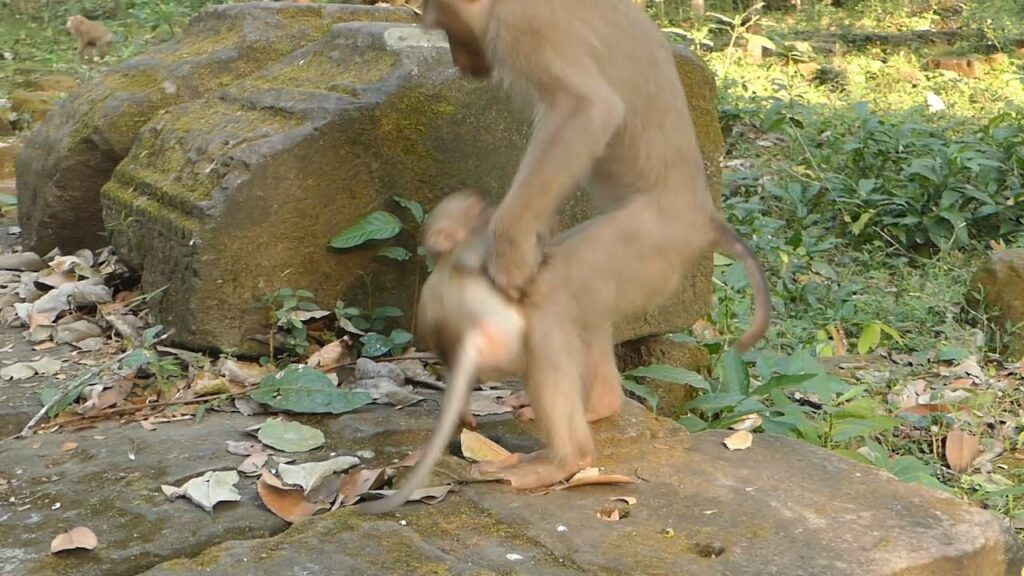
Branches swayed. Tiny feet pattered across ancient temple walls. Energy filled the air.
In the middle of it all was Lily.
Smaller than most of the juveniles, Lily always seemed eager to prove she could keep pace. She watched carefully before joining, her head tilting slightly as if calculating her next move.
One of her friends darted past her, quick and confident. Without hesitation, Lily sprang forward to follow.
But the forest can be unpredictable.
Within seconds, her friend pivoted sharply and tagged her shoulder in a playful burst of speed. Lily stumbled slightly, caught off guard by how fast it all happened. She tried to turn and run again, but her movements were just a fraction slower.
She paused.
Not hurt. Just surprised.
There’s a universal moment in childhood—whether in a playground in Ohio or beneath the trees of Cambodia—when a game moves faster than expected. When a child realizes they’re still growing into their coordination.
Lily sat still for a few seconds, gathering herself. Her friend hovered nearby, curious but not aggressive. It was playful, not personal.
After a short pause, Lily stood again.
She adjusted her stance, shook out her tiny hands, and rejoined the group—this time choosing a lower branch where her footing felt more secure.
The shift was subtle but wise.
Watching her adapt felt quietly powerful. Growth doesn’t always happen in dramatic leaps. Sometimes it happens in small recalibrations after a moment of surprise.
As the game continued, Lily began anticipating her friend’s movements better. She wasn’t the fastest—but she was learning.
Under the towering silhouette of Angkor Wat, Lily reminded me that falling slightly behind doesn’t mean giving up.
It means growing.