He sat low on a fig tree branch near Angkor Wat’s outer trail, one arm held close to his chest. The fur around his wrist was worn thin, revealing a pale scar that told its own history. Not new. Not healing. Just there, like a sentence written long ago.
This monkey had survived something meant to hold him.
Traps don’t announce themselves. They wait. Sometimes for days. Sometimes for the wrong animal. And when a monkey escapes, it doesn’t always escape cleanly. What remains is carried—into every climb, every jump, every moment of hesitation.
We watched from a distance as he tested the branch beneath him. Slowly. Thoughtfully. He moved like someone who had learned caution the hard way.
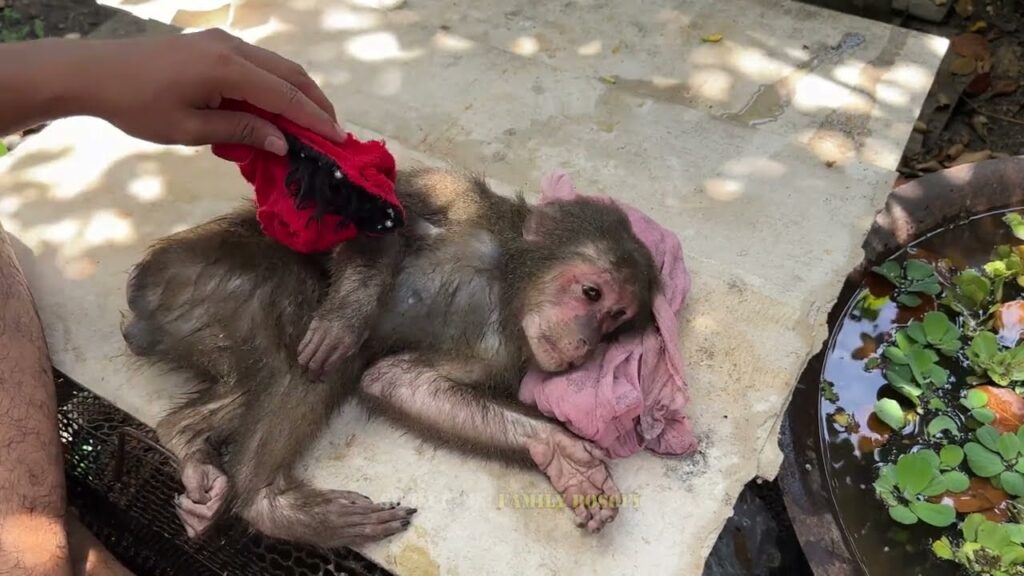
Rescue work in forests like this isn’t loud. It doesn’t look like victory. Often, it looks like waiting. Letting trust grow inch by inch. When help finally came, there were no dramatic movements. Just calm hands, steady breathing, and time.
The moment the old wire was removed, the monkey didn’t leap away. He stayed still. As if surprised by the absence of pain.
Then, something changed. He stretched his arm. Just a little. The scar pulled tight, but it held. He looked at it—not with fear, but recognition.
Scars don’t disappear when freedom arrives. They stay. They shape how an animal moves through the world. But they also mark survival.
When he finally climbed higher into the canopy, the forest seemed to accept him back without ceremony. Leaves shifted. Light passed through branches. Life continued.
And yet, everything had changed.
Because somewhere in the Angkor forest, a monkey was moving forward—carrying his story quietly on his skin.