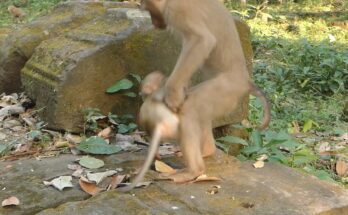
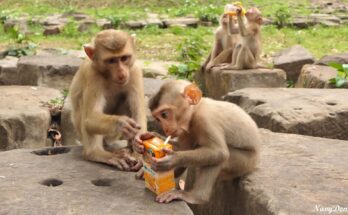
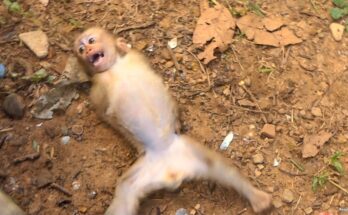
The late afternoon light near Angkor Wat has a way of softening everything it touches. The ancient stones glow warm gold, and the forest quiets as the day begins to settle.
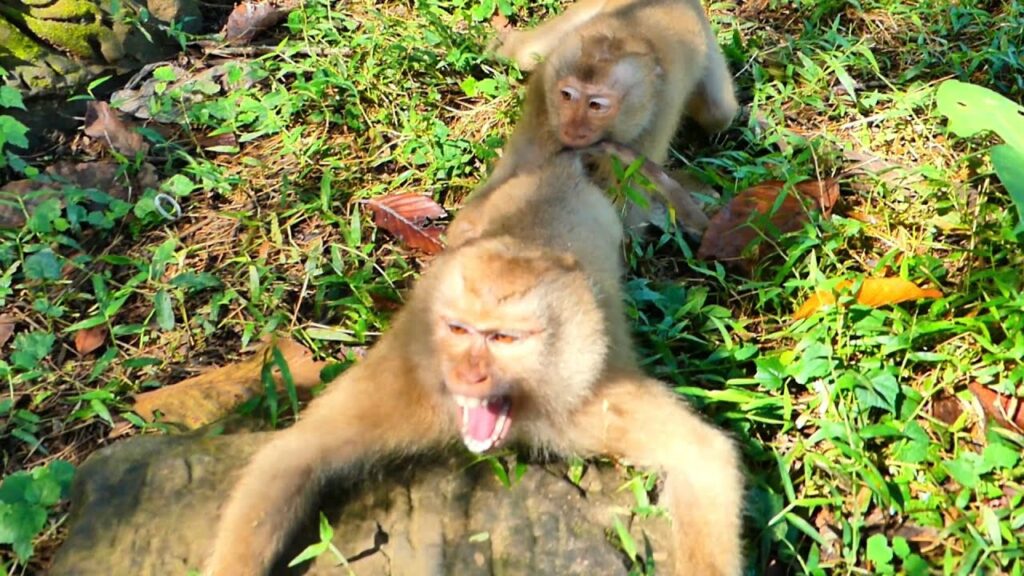
That’s when I noticed the young monkey sitting alone.
He wasn’t far from the troop—just a few feet away on a flat stone near the temple wall. But his posture was different. While the others moved quickly through the trees, he remained still, one small hand resting awkwardly against his side.
At first, I thought he was simply resting. Young monkeys often pause after energetic play. But something about his stillness felt heavier.
When another juvenile approached, he didn’t join in. Instead, he shifted slowly, as though movement required extra effort. His eyes stayed open but cautious, watching the troop without engaging.
There were no signs of aggression from others. No loud conflict. Just a young body that seemed uncomfortable in its own movements.
Moments later, his mother climbed down from a nearby branch. She approached carefully, touching his back with gentle fingers. He leaned into her immediately.
That small lean said everything.
In the wild, minor injuries can happen during play or climbing. A misstep on stone. A slip from bark. It doesn’t take much. And yet, what stood out wasn’t the injury itself—it was the quiet response.
His mother stayed close. She groomed him longer than usual, brushing around his shoulder and neck. She allowed him to cling to her belly without encouraging travel.
The troop adjusted subtly. They didn’t rush him.
Watching this unfold felt familiar in a deeply human way. In the U.S., when a child scrapes a knee or feels sore after a fall, the first instinct is comfort. Presence. Slowing down.
That same instinct was here, in the shadow of ancient temples.
As the sun dipped lower, the young monkey shifted again—this time with slightly more ease. He wasn’t fully back to himself, but he wasn’t alone either.
The forest didn’t rush him.
And neither did his mother.