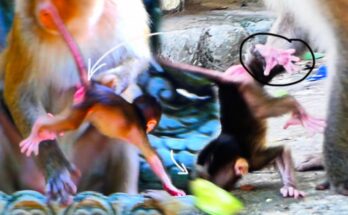
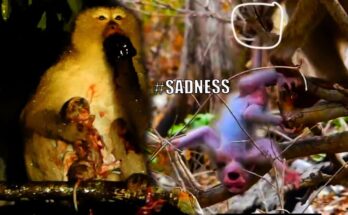
In the Angkor Wat forest, space matters. Who sits close, who steps away, and who is left in between can shape an entire morning.
The newborn lies in that space.
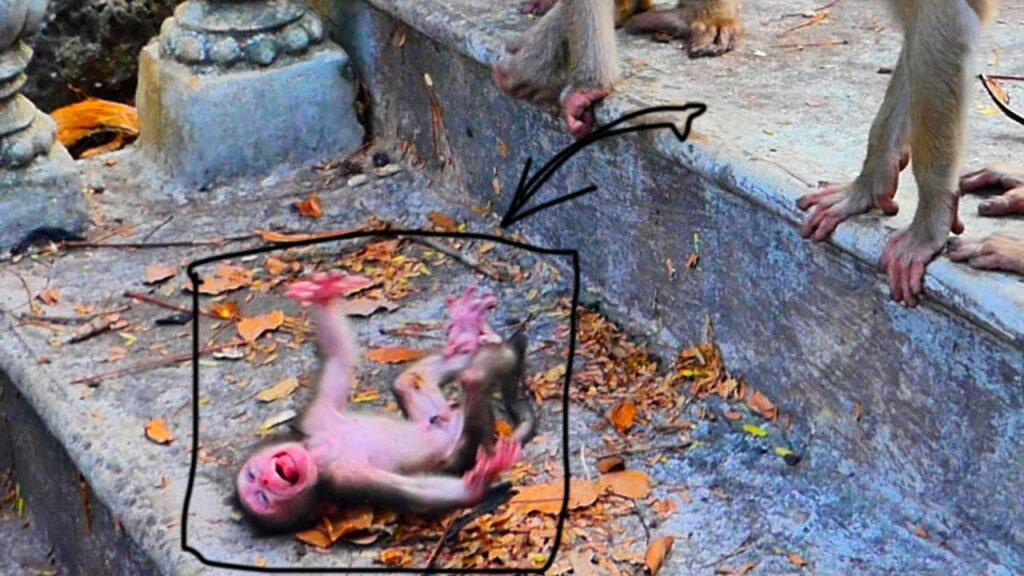
Sarika moves first, adjusting her position on a low branch. The baby follows as best it can, lifting itself with effort that seems far too large for its body. When it reaches her, it pauses—waiting for a familiar closeness that never fully arrives.
Rozy remains a few feet away. Not absent, but not approaching. Her gaze shifts between the baby and the surrounding forest, alert yet restrained. The distance she keeps feels deliberate, as though crossing it would change something she is not ready to change.
The newborn settles again on the ground. It presses close to fallen leaves, finding warmth where it can. There is no panic in its movement—only adjustment.
This is how separation often looks in the wild. Not dramatic. Just gradual.
Nearby, temple stones hold centuries of weather, patience carved into every surface. The forest has seen countless beginnings like this, many of them uncertain.
The baby stretches once more, then rests. Its breathing slows. In the quiet, the viewer notices how resilience begins early—not as strength, but as adaptation.
Sarika eventually looks down. Rozy shifts her weight. Neither moves closer.
This moment does not resolve itself. And that, too, is honest.
For those watching from afar, the instinct is to hope for change in the next second, the next frame. But the forest does not hurry. It allows life to unfold at its own pace, even when that pace feels heavy.
To witness this is to stand quietly with it—to understand that not every story offers comfort, but every story offers truth.