The Angkor forest has a way of holding stories without telling them outright. You have to stand still long enough to notice.
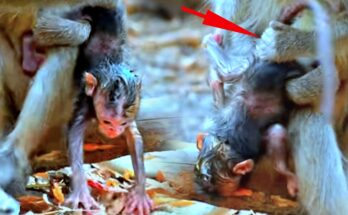
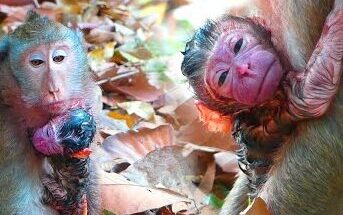
On this morning, the story lay at the base of a tree. A newborn monkey, barely hours old, rested where fallen leaves collected. Its movements were small, uncertain—more reflex than intention.
Above, the branches were empty.
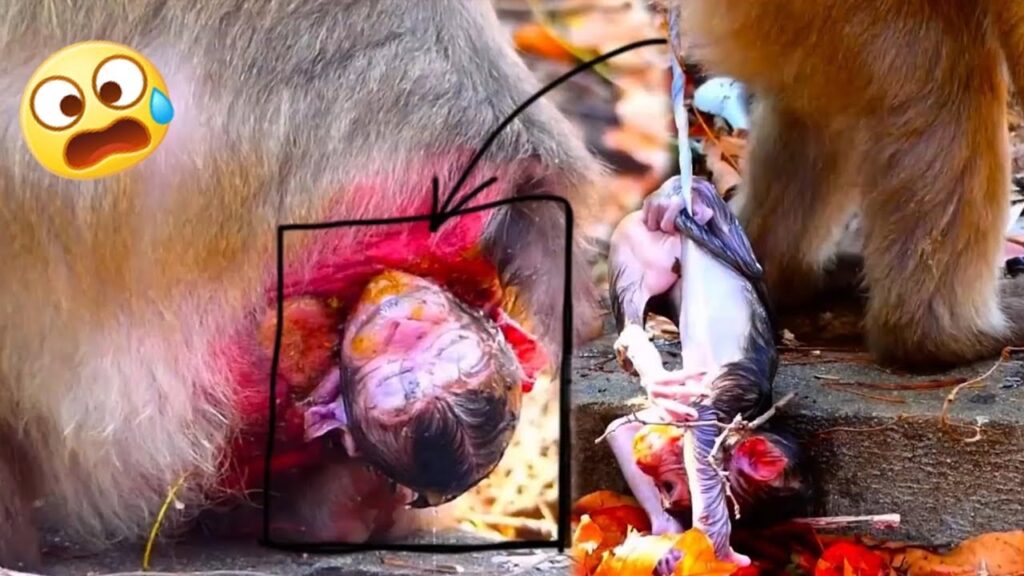
Earlier, the mother had lingered nearby. She watched from a short distance, shifting her weight, scanning the forest as if listening for something unseen. Then she moved away, not quickly, not carelessly—just enough to create space that never closed again.
There was no struggle. No sound. Only the absence that followed.
In the wild, we often search for reasons, but nature doesn’t explain itself. Sometimes a mother leaves because she must. Sometimes because she cannot do otherwise. Standing there, I understood how little certainty exists in those early moments of life.
The newborn waited. Not with awareness, but with instinct. Its body pressed into the earth as if the ground itself might respond.
Around us, Angkor remained unchanged. Ancient stones. Tall roots. The steady pulse of a forest that has seen countless beginnings and endings before this one.
What stayed with me wasn’t the separation—it was the stillness after. The way the world didn’t stop, even as something important had quietly shifted.
This wasn’t a dramatic moment. It was a real one. And sometimes, those are the hardest to forget.