
The morning light came in thin and gold through the canopy above the eastern wall of Angkor Wat, the kind of light that makes the stone look warm, almost alive. I was standing near the base of one of the old galleries when I first noticed the young male — no more than two years old, still carrying the wispy, pale fur of juvenescence along his cheeks.
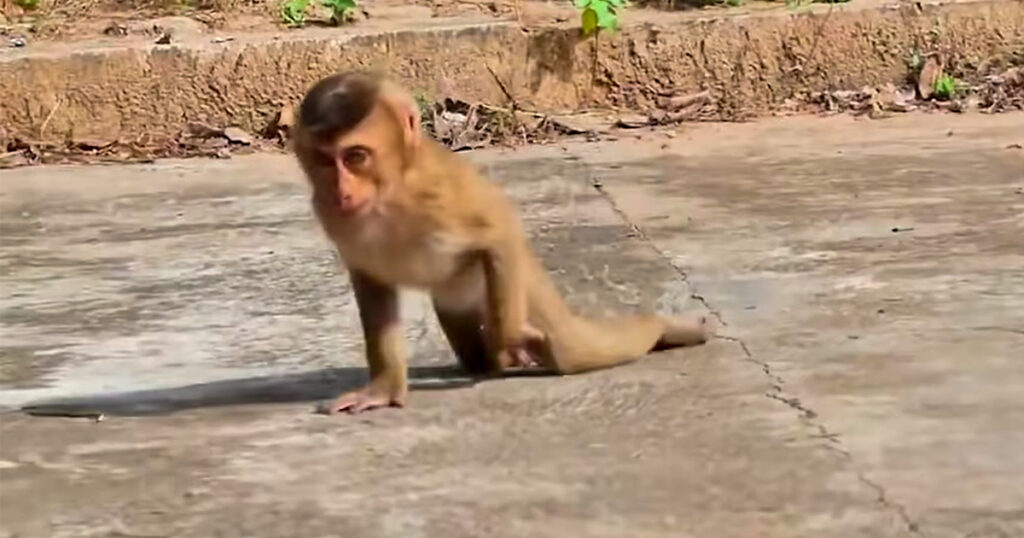
He was sitting alone at the edge of the trail, which was the first thing that felt wrong. Young macaques are almost never alone. They tumble over their siblings, hang from their mothers, crowd into the noise and motion of troop life. This one was very still.
He tried to move. That much was clear. He pressed one small hand against the packed dirt and pushed, but his back legs didn’t answer the way they should have. He tilted. He tried again. There was no drama in it — no sound, no obvious distress. Just the quiet, patient effort of a small animal trying to do something his body wouldn’t let him do.
A larger male had passed through the area perhaps twenty minutes before. The older macaque had moved through with the particular kind of authority that dominant males carry — shoulders wide, pace deliberate. There had been a brief, sharp confrontation near the base of a fig tree. I hadn’t seen the full contact, but the sound of it — fast and hard — had reached me before I looked up.
The young monkey tried a third time to rise. His right leg moved, his left did not fully follow. He managed a slow, careful crawl — more of a drag, really — toward the shade of a low root cluster, where he settled and watched the rest of the troop with wide, amber eyes.
He wasn’t calling out. He wasn’t approaching anyone for help. He simply waited, the way wild animals do when the body needs time and the world keeps moving around it.
Two of the troop’s females passed close by. One paused, glanced down at him, then moved on. Another lingered briefly, her own infant clinging to her chest, before she too rejoined the group.
The young male stayed where he was, breathing slowly, watching the canopy shift in the morning wind. Angkor’s stones rose behind him, ancient and indifferent. The forest, at least, felt present.