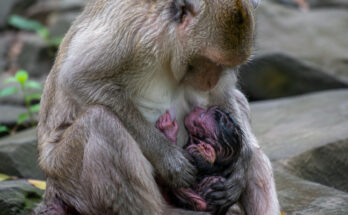
Deep in the Angkor Wat forest, the morning sunlight filtered softly through the ancient trees as a small monkey family settled near a moss-covered stone wall. Among them was a young baby monkey who seemed determined to stay close to his mother at every moment.
The little one repeatedly reached for nursing comfort throughout the morning. Each time, his mother responded differently than she had in previous weeks. Instead of immediately allowing him to nurse, she gently shifted away or encouraged him to explore nearby branches.
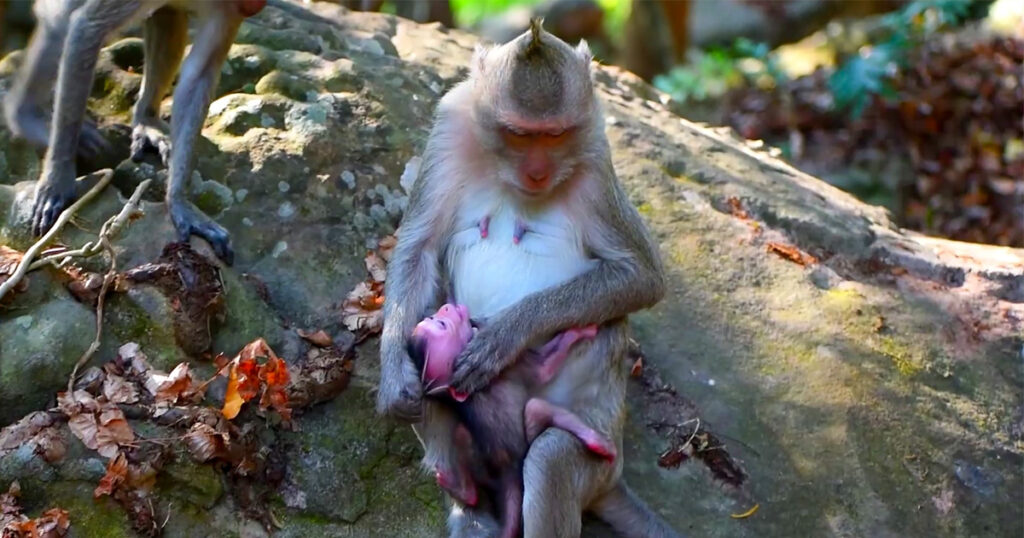
There was no aggression in her behavior. In fact, she stayed close, carefully watching every movement he made. The baby appeared confused by the change. He followed her closely, occasionally vocalizing his frustration, but never wandered far from her side.
Several times, he attempted to climb onto her lap for reassurance. She allowed the contact but encouraged him to sit independently. Nearby monkeys continued their daily routines, seemingly familiar with this important stage of development.
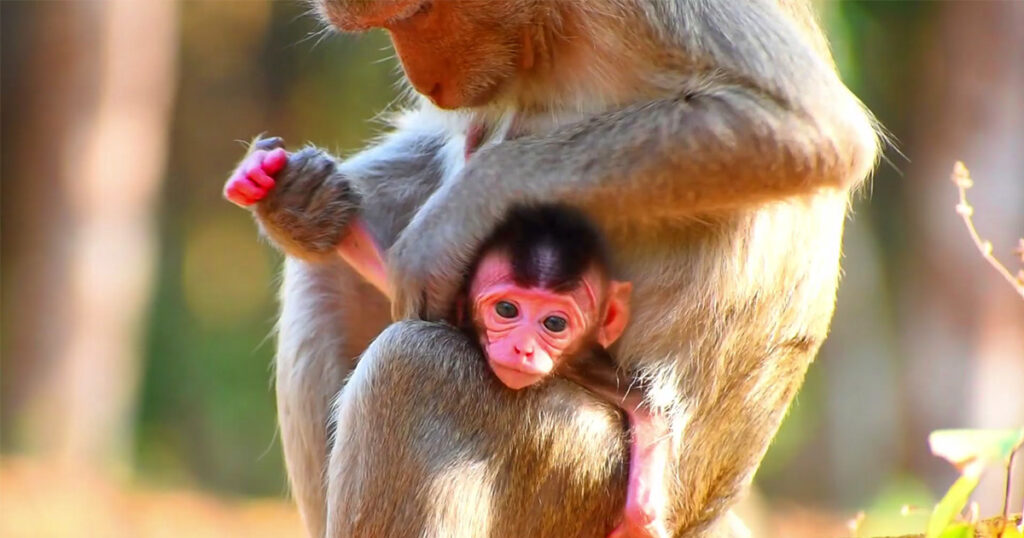
Watching from a distance, it felt like witnessing a universal parenting moment. Whether human or monkey, there comes a time when young ones begin learning confidence on their own.
As the afternoon passed, the baby slowly became distracted by leaves, insects, and playful interactions with other young monkeys. His mother remained nearby, alert and protective, yet she allowed him more freedom than before.
By sunset, the little monkey appeared calmer. He still sought comfort from his mother, but he also spent more time exploring independently.
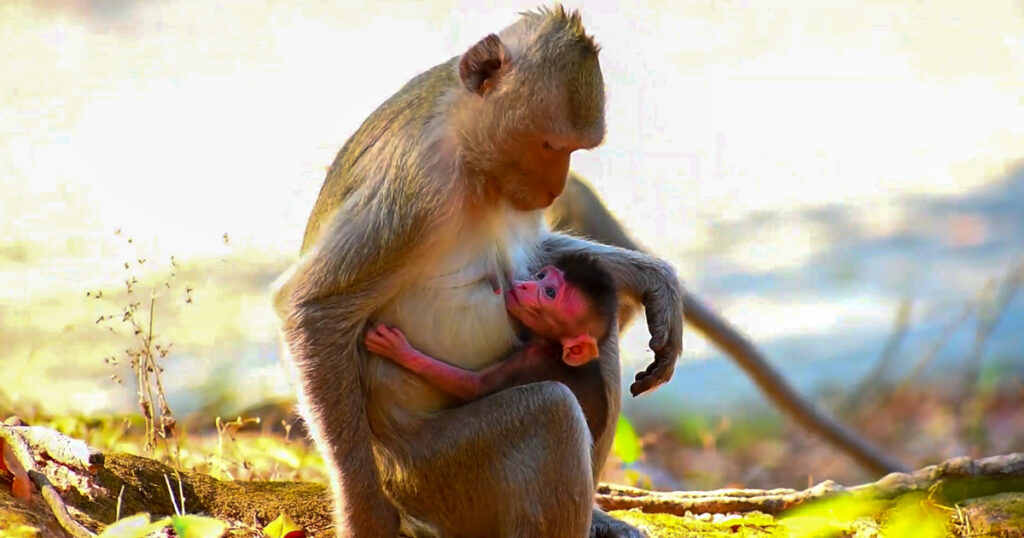
The scene served as a quiet reminder that growing up often involves small challenges. While change can be difficult, it also creates opportunities for learning and confidence.
For visitors to the Angkor Wat forest, these moments reveal the remarkable bonds that exist within monkey families and the gentle lessons mothers teach every day.