The morning mist was still low over the old stone walls when I noticed something wrong at the edge of the tree line.
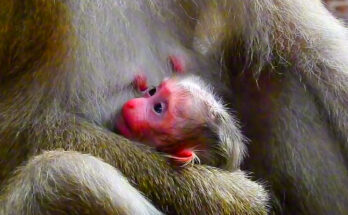
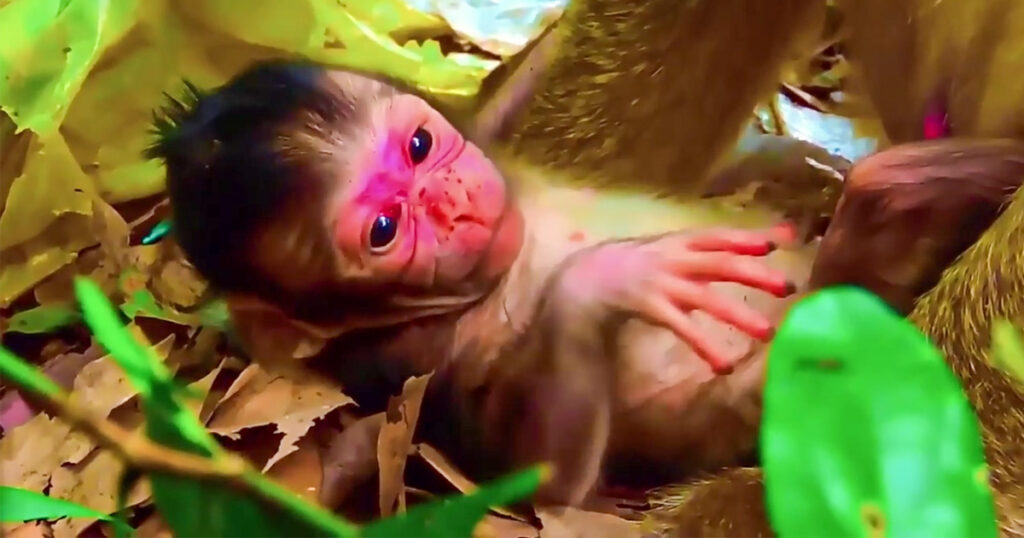
A newborn macaque — impossibly tiny, fur still damp — was lying on the roots of a fig tree just inside the forest. His mother sat a few feet away, restless and distracted, her eyes scanning the treetops rather than her baby. Something had shifted between them. She wasn’t grooming him. She wasn’t pulling him close.
For nearly twenty minutes, I watched without moving.
Other members of the troop passed by. A few paused, glancing at the infant with what I can only describe as cautious curiosity. One older female reached down and touched him briefly, then moved on. The baby stirred, lifted his tiny arms, and made a sound so soft it barely carried over the wind in the leaves.
A younger female — not the mother — stopped. She crouched low, tilting her head to one side. Then she did something I wasn’t expecting: she picked him up. Not roughly. Gently, the way you’d hold something fragile. She cradled him against her chest and sat down right there in the roots, rocking almost imperceptibly.
The baby’s fingers closed around a fold of her fur.
I’ve spent a lot of mornings in this forest. I’ve seen macaque troops move through Angkor Wat like they own the place — because in many ways, they do. But I’d never watched something like this unfold so quietly. No drama. No chaos. Just one small animal in need, and another one deciding to stay.
The mother eventually drifted back toward the troop. Whether she’d return for her baby, I couldn’t say. But for those minutes in the shadow of those ancient stones, that little one wasn’t alone. He had someone.
That’s the thing about this forest. It surprises you, every single time.