The mist still clung low to the ancient stones of Angkor Wat when I heard the first cry. It was sharp, tiny, trembling—the kind of sound that stops your breath for a moment. I’d been walking the forest path that winds behind the temple ruins, a place where the long-tailed macaques live freely among banyan roots older than memory itself.

That morning felt different. The air was still, heavy with the smell of wet earth from the rain the night before. Birds hadn’t even started their usual chatter yet. And then came the cry again—this time louder, desperate, almost pleading.
I followed the sound until I found her.
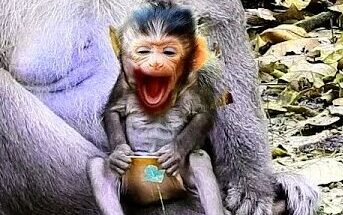
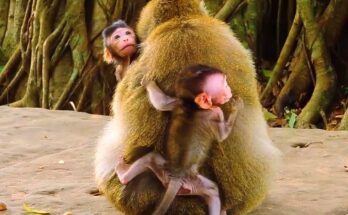
A newborn monkey, no bigger than my hand, pressed her tiny face against her mother’s belly, searching frantically for milk. Her little fingers trembled as they clung to her mother’s fur. But instead of pulling the baby close, the older mother shifted, pushing the newborn away each time she reached for the warmth and comfort she needed.
At first, I didn’t understand. It’s hard to see animal behavior through human emotions, but the baby’s reaction—it went straight to the heart. She let out a scream: not angry, not demanding… but heartbroken.
A small, helpless scream that echoed through the trees.
The mother monkey was older—her ribs visible, her fur thinning, her movements slow and uncertain. She looked exhausted, as if carrying the newborn alone had drained everything she had left. She wasn’t rejecting her baby out of cruelty; she was struggling, overwhelmed, barely able to care for herself.
The baby didn’t know that, of course. She only knew she was hungry. She only knew she needed her mother’s body, her heartbeat, her warmth.
The forest watched quietly, as if holding its breath.
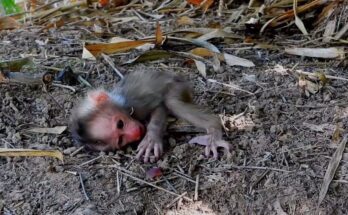
The mother tried again to climb the nearest tree, but the baby clung so tightly to her leg that she kept losing balance. With a frustrated grunt, she nudged the newborn aside. The baby fell backward onto the soft moss, unharmed—but the cry that came next was something I will never forget. It was the kind of cry that carried confusion, fear, and the raw instinct of survival.
I knelt a short distance away, careful not to intrude. The baby looked up at her mother with wide, shining eyes—still trusting, still believing that the next moment would be the one when Mama would pull her in close.
And finally, something shifted.
A younger female monkey appeared from the nearby branches—perhaps a daughter from an older litter or a member of the same troop. She approached slowly, circling the older mother, watching both carefully. The older mom didn’t chase her away.
With gentle, deliberate movements, the younger monkey lifted the newborn, placing the tiny body against her chest. The baby latched instantly, holding on with every ounce of strength she had left.
In that moment, the forest softened again. The sunlight broke through the canopy, landing like a quiet blessing over the three of them—mother, baby, and the unexpected guardian who stepped in when the mother could not.
The older mama watched, eyes tired but calm now, as if relieved that someone else had the strength she lacked.
I stayed with them for nearly an hour as the newborn drank, rested, and finally stopped crying. The troop gathered slowly around them, offering safety and warmth in that instinctive, unspoken way wild animals care for their own.
And in that moment, I felt something I wasn’t expecting—gratitude. Gratitude that even in struggle, even in weakness, even when the mother could not give what she wished she could, the forest found a way to protect the newborn.
Angkor Wat may be ancient stone and history to us—but deep in its forest, life continues in ways that remind us of what really matters: connection, compassion, and the quiet moments where love shows up from the most unexpected places.