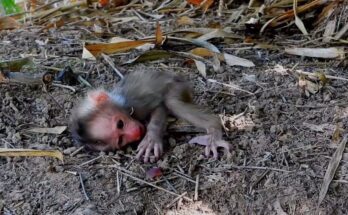
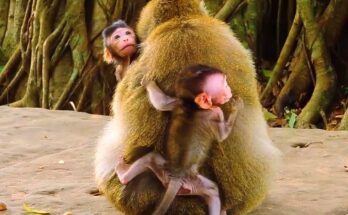
I still remember the first time I saw Rainbow, Jaycee, and little Lynx together, framed by the ancient stones and lush greenery of the Angkor Wat forest. The morning light was soft, golden — like silent applause from the centuries-old temple trees. As they moved, playful and full of purpose, I felt a quiet stirring in my heart, as though I was witnessing something profound: a family actually living their independent life, in harmony with nature and history.
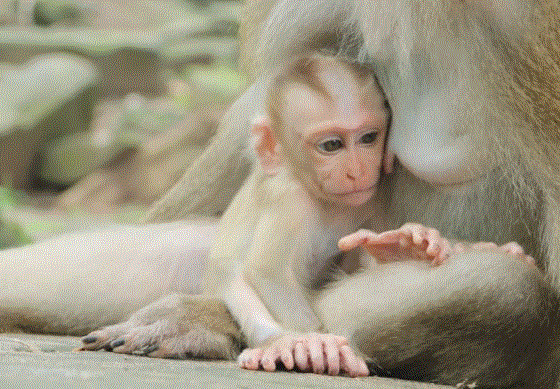
Rainbow was the first I noticed. Tall, with a calm strength, she carried a small basket of supplies as she walked along a mossy path. Her face glowed with peaceful determination. Jaycee followed behind, his energy brimming — he gently encouraged Lynx, their youngest, who scampered through patches of sunlight, fingers brushing leaves, eyes shining. Together, they were like a living rainbow themselves, full of color, motion, and joy.
They had come to Cambodia to pursue a dream many only whisper about: to live life on their own terms, free from the constraints of day‑to‑day routine, to learn and grow not in a classroom but under the open sky, to write their own story. And what more magical place to do that than among the ancient ruins of Angkor Wat, nestled in the heart of the forest?
As I walked with them that morning, I asked Rainbow how they made it happen — how they left their old life, their routines, in favor of something so bold. She paused by a massive tree whose roots curled like ancient serpents over a crumbling stone pillar.
“We wanted to prove,” she said softly, “that life doesn’t have to fit a mold. Jaycee, Lynx, and I — we believe in freedom. Not the kind that’s reckless, but the kind that’s rooted in purpose.” She reached out and touched one root, as if drawing strength from both the tree and the earth.
Jaycee, always the more boisterous, chimed in: “We homeschool, yes. But what really teaches my heart is watching a dragonfly skim the water, or listening to the forest wake up at dawn, or feeling the cool ancient stones under my fingertips.” He laughed, pointing toward Lynx, who had crouched by a lotus pond, mesmerized by a frog. “And Lynx — she’s our little scientist. She asks questions all day long. ‘Why does water ripple like that? Why do the roots twist in so many directions?’”
Little Lynx looked up at me then, her eyes wide, and said in her innocent, curious voice, “Because everything here is alive. Even the stones breathe.”
I swallowed hard at that — the child’s wisdom, the way she saw the world as alive, speaking to her in its own language. In that moment, amid the towering temple walls and emerald leaves, I felt I was watching not just a family, but a movement: the possibility of a life lived fully and deeply, beyond the rigid structures many of us accept without question.
They told me about their daily rhythm: waking at dawn, sharing quiet meditations, tending to a small garden they’d built by a secluded ruin, sketching the temple carvings, reading aloud under the canopy of trees. They spoke of times when the forest itself seemed to teach them — how the roots showed resilience, how moss taught patience, how the stone walls whispered stories of centuries.
One evening, as the sun dipped behind the spires of Angkor Wat, they invited me to sit with them on an old terrace. The air was warm, but gentle, and the forest sang around us. We watched shadows stretch and twist over ancient bas-reliefs, while Lynx traced her fingers over a carving of an apsara dancer, her tiny voice soft, reverent.
“I think they danced here a thousand years ago,” Lynx said. “And maybe someday, I’ll dance like them. But not just dance — breathe like them, feel like them.”
Rainbow smiled, wrapping an arm around Lynx’s shoulders. “You already breathe like them, sweet girl. You already feel like them. This place is in you as much as you’re in it.”
As night came, fireflies flickered, and the forest grew deeper, more alive in its darkness. The three of them — mother, father, child — sat together, silent, connected. I realized then that their independent life wasn’t just about rejecting something. It was about embracing — embracing nature, embracing their own hearts, embracing a profound kind of freedom rooted in love.
Before I left, Jaycee handed me a small journal, its leather cover soft from use. Inside were sketches of temple lines, wild leaves, Lynx’s notations about insects and frogs — a map of their daily life, drawn in wonder.
“That’s our journey,” he said. “Not perfect. Not easy. But beautiful.”
They turned back to the forest, and I watched them go, the sunlight framing them like a halo. I thought about my own life, the routines I carried, the boxed-in spaces of my mind. And I felt, for the first time in a long time, the possibility of something different: a life that isn’t just lived, but felt, deeply, in every breath.