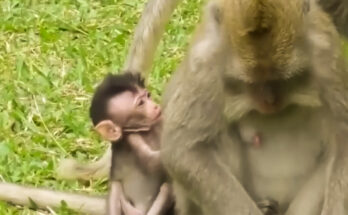
The Angkor Wat forest is breathtaking at dawn. Sunlight pierces the dense canopy, casting golden streaks across moss-covered stones and roots that have grown over centuries. Birds chirp, leaves rustle in the gentle wind, and monkeys chatter from the trees above, moving like shadows through the branches. It is a place of magic, mystery, and an ancient sense of timelessness. But on that morning, as my friend Alba and I stepped deeper into the forest, its beauty became the backdrop for a moment that I will never forget.
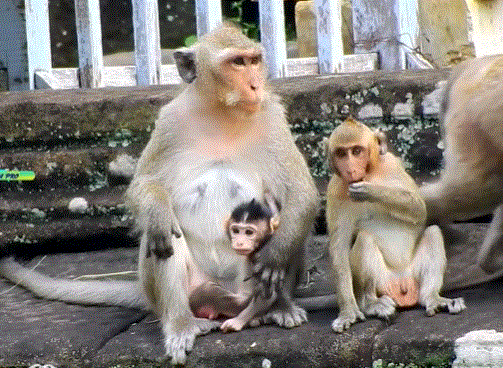
Alba had always been adventurous, full of life and curiosity. She laughed at everything, from the way moss clung to the temple stones to the playful monkeys leaping from branch to branch. But that morning, there was something different in her expression. She paused mid-step, her hand rising to her chest, her smile fading.
“Are you okay?” I asked, trying to sound calm, though a pang of worry knotted in my stomach.
Her eyes darted around the forest. For a moment, she seemed disoriented, confused. Then, in a quiet, trembling voice, she whispered, “I… I don’t remember what happened.”
I froze. The words echoed between the ancient stones and tangled roots, reverberating through the forest as though the trees themselves were listening. Alba’s normally bright eyes were wide with fear, glassy, and unsteady. She stumbled slightly, and I caught her before she fell, holding her close as she trembled against me.
The forest, which had felt so alive just moments before, now seemed to hold its breath. Even the monkeys went silent for a moment, their curious eyes watching from above. It was as if the world had paused, and all that mattered was the fragile human life in my arms.
“I’m here, Alba. I’ve got you,” I whispered, pressing my jacket around her shoulders. “You’re safe.”
She clung to me, shivering, her body small and vulnerable against the vastness of the forest. I could feel the rapid pulse in her wrist, the quick, shallow breaths, and the tremor running through her arms. I didn’t know exactly what had happened, but I knew that whatever it was, it had shaken her to her core.
Minutes stretched into what felt like hours. She drifted in and out of consciousness, her mind flickering between fear, confusion, and fleeting recognition. Each time she woke, she looked at me with a question in her eyes: “Where am I? Who am I? What happened?” I held her hands, kept my voice calm, and tried to ground her in the present moment.
The forest around us remained ancient and silent. Roots twisted like serpents around broken temple stones, and the mossy ground was soft beneath us. Sunlight streamed in through the canopy, illuminating the carvings of apsaras and guardians, silent witnesses to our struggle. Monkeys swung overhead, their playful movements a stark contrast to the weight of the moment below.
We were eventually joined by a local guide, his calm presence a relief. He knelt beside us, offering water, checking her pulse, and speaking softly, assuring her that everything would be okay. With his help, we slowly moved to a clearing, where sunlight fell fully on the moss-covered stones. I supported her every step, careful not to let her stumble on the uneven forest floor.
Sitting together in the clearing, I told her stories—stories of the temples, of the forest, of us. I reminded her of our journey, of the laughter we shared just minutes before she lost her memory, of the excitement of discovering a world so old and mysterious. Each story was a tether, a way to help her reconnect to herself, and to me.
Tears streamed down her cheeks, quiet sobs that seemed small but carried immense weight. “I feel… lost,” she whispered, voice barely audible. “I don’t remember anything.”
“You’re here now,” I said softly. “That’s what matters. I’m with you. We’ll get through this together.”
Hours passed. The forest slowly shifted as the sun climbed higher, shadows shortening across ancient stone and twisted roots. Slowly, Alba’s tremors eased, her breathing became steadier, and the pale fear in her eyes was replaced by a fragile spark of recognition. She looked at me, and for the first time that day, she managed a small, grateful smile.
By late afternoon, the guide escorted us to a small local clinic at the edge of the forest. Alba rested on a cot, wrapped in blankets, her skin still pale but recovering. I stayed by her side, holding her hand, watching as the tension gradually left her body. Outside, the forest remained vast and unchanging, the timeless trees and stone monuments standing as silent witnesses to our ordeal.
The forest, I realized, is not only a place of wonder. It can also be a place of vulnerability, where humans are reminded of how fragile life can be. Alba’s struggle was sudden and terrifying, but it revealed something profound: the importance of connection, presence, and compassion in moments of fear.
Even now, I can close my eyes and see the sunlight filtering through the canopy, hear the distant calls of monkeys, feel the mossy ground beneath my feet, and remember the tremor of her small body in my arms. That day in the Angkor Wat forest changed us. Not just because of the fear we endured, but because of the quiet, unspoken bond it forged between us.
We left the forest with a new understanding of life and fragility. Every step we took afterward was measured with care, every glance toward the ancient stones reminded us that beauty and danger can coexist, and that human connection can be the strongest anchor in moments of uncertainty.
If you ever walk the forest paths of Angkor Wat, I hope you remember this story. Step gently, hold your friends close, and listen not only to the whispers of the wind and leaves but to the quiet needs of those beside you. Because sometimes, what happens in the forest is not just about nature, but about the wild vulnerability within us all—and the strength it takes to hold someone through it.
Alba’s struggle may have lasted only a few hours, but its memory will last a lifetime. It is a reminder that the forest sees all, that life is fragile, and that compassion can transform fear into something lasting, something sacred.