A Quiet Morning in the Ancient Forest
The sun had just begun to rise over Angkor Wat, its first golden rays spilling gently through the thick jungle canopy. The ancient stones, draped in vines and moss, shimmered with morning dew. The air was still — except for the soft rustle of leaves and the faint chatter of a small troop of monkeys greeting a new day.
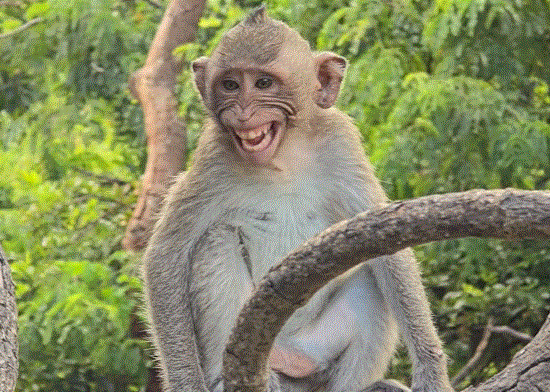
Among them, a young monkey sat on a mossy rock, holding a fresh branch between his hands. He wasn’t in a hurry. He took a leaf, studied it like a treasure, and began to chew — slowly, thoughtfully, as if savoring the taste of life itself.
It was simple, quiet, and profoundly beautiful.
Daily Rituals of the Wild
For these monkeys, the forest is everything — their playground, their kitchen, their home. Every day begins the same way: they stretch in the morning light, groom each other with lazy affection, and then go looking for leaves, fruits, and tender shoots.
The young ones imitate their elders, learning which leaves are best — which are sweet, which are bitter, which are safe. It’s a lesson passed down not through words, but through example — through patience, rhythm, and trust.
As I stood watching, I noticed something deeply peaceful about the scene. There were no arguments, no rush, no worry about tomorrow. Just a group of wild beings completely in tune with their surroundings, living by nature’s slow, forgiving clock.
Every leaf they ate was a quiet reminder that the forest still provides.
The Language of Togetherness
It’s easy to think of eating as something ordinary. But in the Angkor forest, it’s also an act of togetherness.
A mother chewed gently while her baby sat in her lap, reaching for a piece of leaf she held out for him. When he took it, his tiny hands shook with excitement — as though he’d just learned the world’s simplest, most wonderful secret: that food grows right where you live, and that your mother will always share hers first.
Nearby, two young monkeys playfully tugged at the same branch, each trying to get the best leaves. Their squeals of laughter (yes — monkeys laugh, in their own bright way) echoed through the ruins. Older ones watched, amused but patient. The forest, filled with life, seemed to hum with quiet joy.
The Witness
I watched from a distance — camera in hand but heart leading more than lens.
There’s something about watching animals live freely that humbles you. These monkeys didn’t need walls or fences. They didn’t hoard. They didn’t take more than they needed. They simply lived — present in each moment, grateful in the silent way wild creatures are.
One older female noticed me. She paused, a leaf halfway to her mouth, her wise eyes calm and unafraid. For a moment, we just looked at each other. Then she resumed eating, as if to say, It’s okay, you can stay.
That moment — of quiet acceptance — felt like a small gift from the wild.
A Lesson Hidden in Green
The more I watched, the more it became clear that what looked like a simple act — monkeys eating leaves — was something deeper. It was balance.
They took only what they needed. When they moved on, the trees were still alive, ready to grow again. No greed, no waste — only gratitude.
It made me think about our own human habits — our rush, our endless wanting, our forgetting to pause. Watching those monkeys reminded me of something I hadn’t felt in a long time: that peace can be found in small, natural things.
Maybe that’s why people from all over the world come to Angkor. Not just for the temples, but for the way the forest still breathes — the way life still feels whole here.
When the Day Slows Down
By noon, the troop had moved deeper into the forest, finding shade beneath the ancient fig trees. Some rested, some groomed each other, and some still chewed quietly, lost in the simple rhythm of life.
The youngest one — the same baby who had learned to eat from his mother earlier — now practiced alone. He picked up a leaf, turned it in his hands, and nibbled it proudly, glancing around to see if anyone was watching.
His mother looked over and let out a soft call — low, affectionate, reassuring. The kind of sound only a mother can make.
I smiled. The forest felt alive, timeless, safe.
A Moment to Remember
As I packed my camera, I realized I hadn’t just filmed animals eating. I had witnessed peace — a kind of peace that humans rarely allow themselves anymore.
No screens. No noise. No rush. Just the sound of leaves, wind, and gentle chewing.
When the troop finally disappeared into the trees, all that was left was the soft sway of branches and a quiet sense of gratitude — from them, and from me.
Because sometimes, the most ordinary moments in the wild are the ones that whisper the loudest truths.