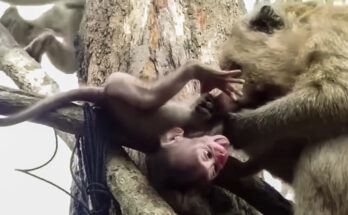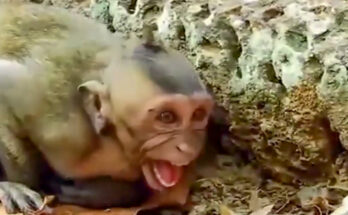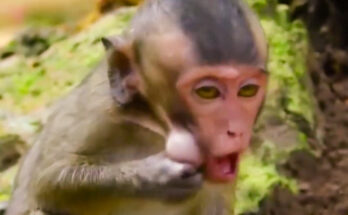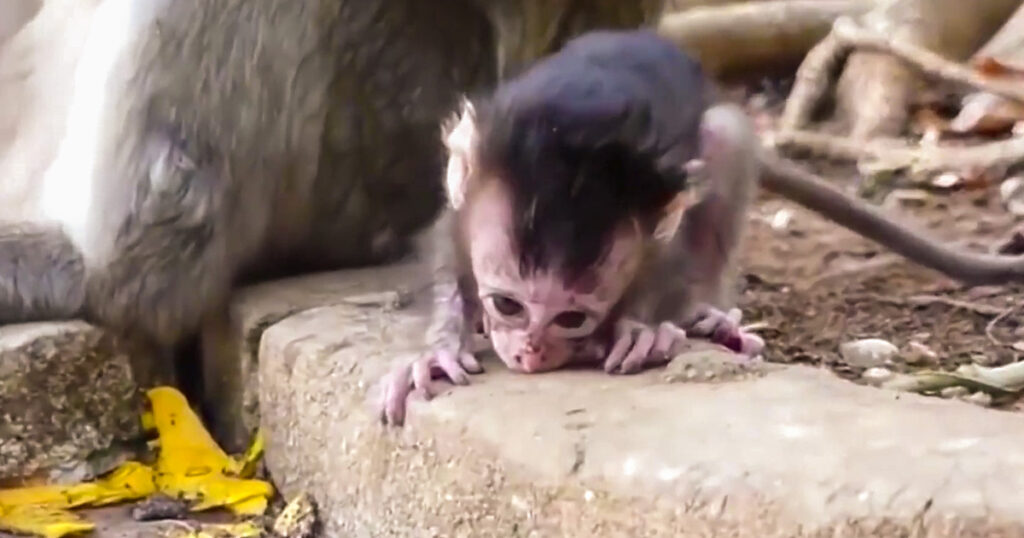
In the quiet shade of the Angkor Wat forest, a young monkey named Martin sat beneath a mango tree, watching the older monkeys gather fallen fruit from the ground. The morning air felt heavy after a humid night, and the leaves above barely moved.
Martin stayed close to Malida, an older female monkey who had collected several ripe mangoes. He followed her slowly through the roots and stones, pausing every few steps. His small hands reached toward her once, then dropped again when she turned away.
The forest carried soft sounds — birds overhead, insects moving through dry grass, and distant rustling from nearby branches. Martin waited patiently, never loud or demanding. He simply watched.
Malida climbed onto a low branch and settled in the shade while Martin remained below, looking upward. At times he searched the ground for scraps, but nothing remained. He eventually sat near an old tree root, resting quietly.
Moments like this are common in the Angkor Wat forest. Young monkeys learn patience early. Food is not always shared, even among familiar groups. The quiet interaction between Martin and Malida reflected the natural rhythm of survival and independence.