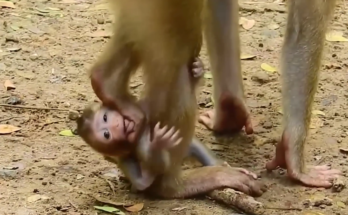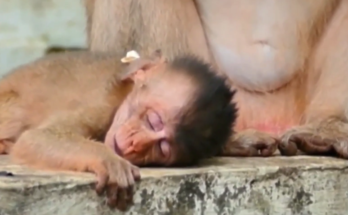
In the quiet shade of the Angkor Wat forest, a small baby clung tightly to his mother’s side, reaching again for comfort he had known since birth. She shifted slightly, adjusting her posture, her gaze steady but distant.
The baby tried again, nudging closer. This time, she gently guided him away with a careful movement—not harsh, but firm enough to create space. It was a moment that felt both tender and difficult to watch.
Around them, the forest continued as usual. Leaves rustled softly, and other monkeys moved through the branches without pause. But here, something subtle was changing. The baby lingered, uncertain, learning a new boundary he didn’t yet understand.
His mother remained nearby, watchful, present, but no longer offering what he sought. It wasn’t rejection—it was transition. A quiet step toward independence, shaped not by emotion alone, but by instinct and survival.
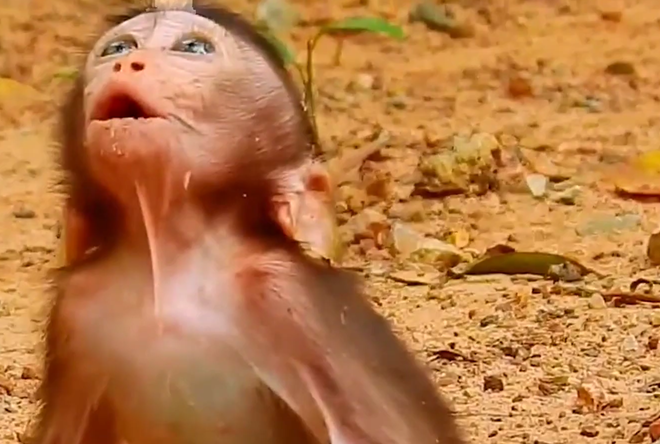
Moments later, the baby sat still, looking out across the ruins. The distance between them was small, but meaningful.