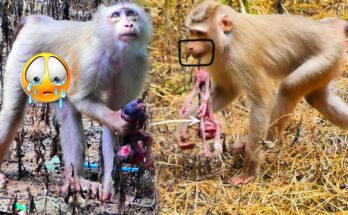
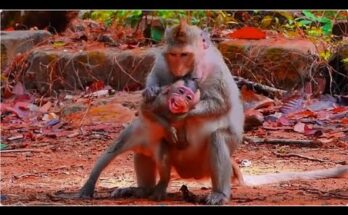
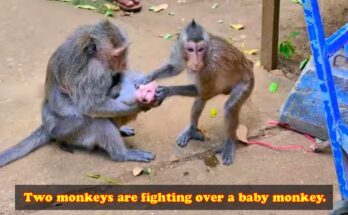
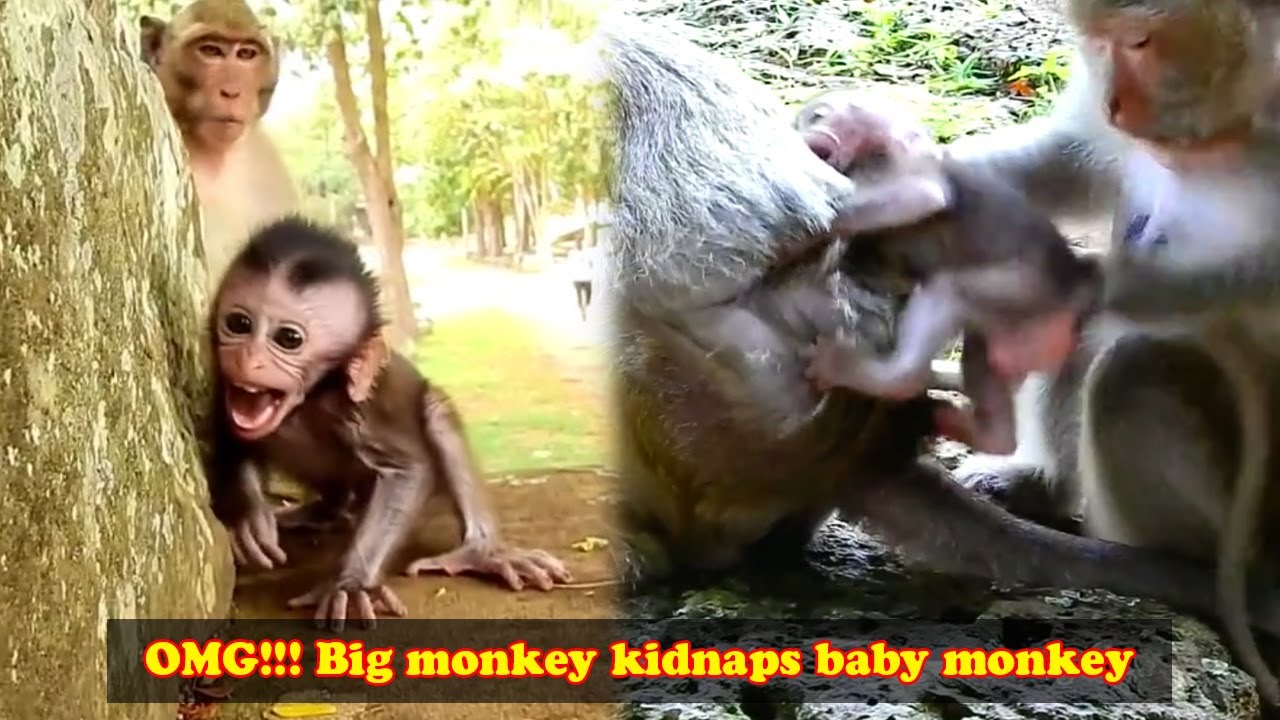
The jungle canopy rarely keeps secrets for long. When a baby macaque was snatched away from its mother by another member of the troop, its piercing cries cut through the undergrowth like an alarm that no amount of distance could silence. What followed was a reminder that in the animal kingdom, a mother’s instinct is one of the most powerful forces in nature.
Footage documented by the Asian Macaques YouTube channel captures the tense sequence of events in striking detail. The infant, visibly distressed and vocalizing frantically, struggled in the grip of its captor — another monkey whose motivations, whether territorial, opportunistic, or driven by a misguided maternal impulse of its own, remain part of the complex social fabric of macaque life.
The baby’s calls were not in vain. Within moments, the mother located her offspring and moved with a focused urgency that left little room for hesitation. Macaques are not small animals, and a determined mother within a social troop carries both physical presence and social authority. She closed the distance quickly, confronted the captor, and retrieved her infant.
The reunion was immediate and unmistakable. The baby clung to its mother’s chest, its cries tapering into the quieter sounds of comfort. The mother, for her part, moved away from the scene with the deliberate calm of an animal whose sole objective had just been accomplished.
Biologists who study primate behavior have long documented infant kidnapping as a phenomenon within macaque troops and other primate species. It occurs most often among females who have lost their own young or who have not yet had offspring, driven by hormonal states that produce caregiving behavior without a viable outlet. While the behavior can cause significant distress to both the infant and its biological mother, troops often resolve these situations through social pressure, vocalizations, and direct physical intervention.
What makes the footage from Asian Macaques so compelling is the speed and clarity of the maternal response. There was no prolonged search, no confusion. The mother followed the sound of her baby’s distress across whatever terrain separated them and acted decisively when she arrived.
For viewers watching from a distance — whether in a wildlife reserve in Asia or on a screen thousands of miles away — the episode compresses a world of primate social complexity into a single, emotionally legible moment. The baby cried. The mother came. That equation, ancient and unadorned, played out exactly as it has for millions of years across species far beyond our own.
In a world where nature documentaries often require narration to explain what we are seeing, this particular encounter needed very little interpretation at all.
Source: Asian Macaques, YouTube (https://www.youtube.com/watch?v=1XgDQr0vRWg)
Watch the original video →