Before a baby monkey ever appears in a heartwarming video — before the wide eyes and the small yawns and the curling fingers capture an audience of millions — there is usually a harder story. It is the story of why that infant is in human hands at all.
Adorable Wildlife’s latest weekly compilation of newborn baby monkey moments has drawn widespread appreciation for its warmth and tenderness. But the footage also gestures toward a broader context that is worth understanding: the world of primate rescue and sanctuary care, where the work of raising infant monkeys is as demanding as it is meaningful.
Baby monkeys are, by nature, among the most attachment-dependent of all newborns. In the wild, infant primates cling to their mothers almost continuously for the first weeks and months of life. They feed frequently, sleep in physical contact with caregivers, and rely on that proximity for both warmth and emotional security. When that bond is disrupted — through habitat loss, human-wildlife conflict, or the illegal pet and exotic animal trade — the consequences for the infant are significant.
Sanctuaries and wildlife rehabilitation centers that take in orphaned or displaced infant primates face the challenge of replicating, as closely as possible, the conditions of natural maternal care. This means round-the-clock feeding schedules, careful attention to temperature and physical comfort, and consistent handling by a small number of caregivers to build trust without creating harmful human dependency.
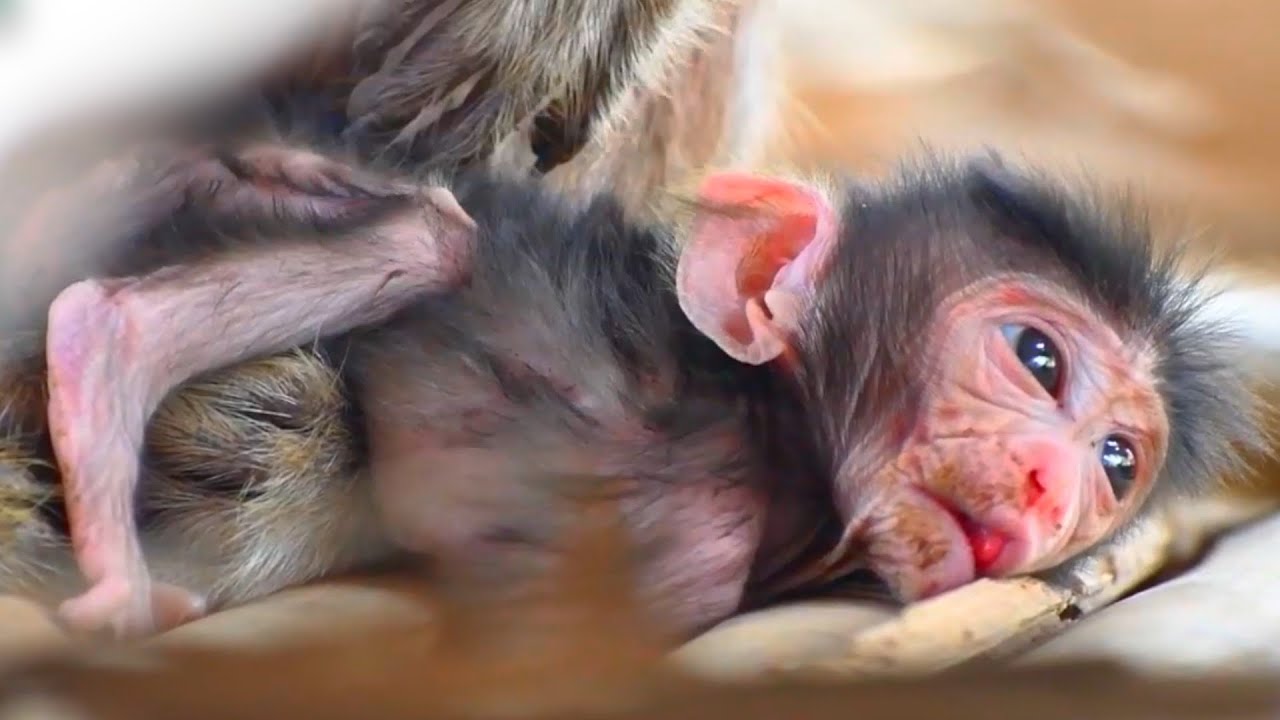
The babies in the Adorable Wildlife compilation appear to be in exactly this kind of attentive, stable care environment. Caregiver hands appear at the edges of frames. The animals are calm and well-supported. Their surroundings, while not natural habitat, appear clean and safe. These are the visible signs of good practice in infant primate care — small details that tell a larger story about the labor behind the footage.
The global situation for wild primate populations adds urgency to that story. Deforestation, agricultural expansion, and the illegal wildlife trade continue to put pressure on primate species across Africa, Asia, and South America. Sanctuaries are often the last line of defense for individuals caught in the crossfire of those pressures, providing care that — in the best cases — leads eventually to rehabilitation and release, or, where that is not possible, long-term refuge.
For viewers watching a tiny monkey blink and stretch on their screens, none of this complexity is necessarily visible. And that is perhaps as it should be. The joy of the moment stands on its own. But it is richer for knowing what surrounds it — the knowledge that skilled, committed people have made it their work to ensure that these small lives are held carefully.
Every yawn, in that light, is a small victory.
Source: Adorable Wildlife, “Top Cute Compilation Moments Of Newborn Baby Monkey This Week,” YouTube.
Watch the original video →