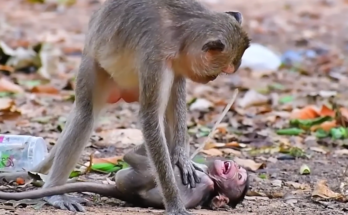
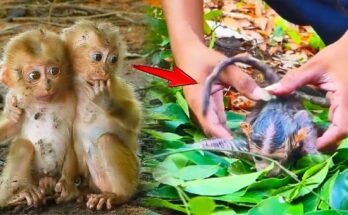
There is something about the cry of a baby — any baby — that stops people in their tracks. When that cry belongs to a tiny monkey named Leo, filmed in a moment of unmistakable distress as his mother handles him roughly, the response from online viewers has been swift, emotional, and deeply personal. The footage, posted by the YouTube channel Monkey Library, has sparked conversations that extend far beyond a single video of a single primate infant.
The Power of Cross-Species Empathy
Humans are wired to respond to infant distress signals. Research in developmental psychology and neuroscience has shown that the sound of a crying baby activates regions of the brain associated with empathy and caregiving, and this response is not limited to human infants. When viewers watch baby Leo’s face crumple into what can only be described as anguish, when they hear his high-pitched cries as his mother repositions him with apparent roughness, something primal activates in the human observer.
This is not sentimentality. It is biology. The round eyes, the small trembling body, the open mouth releasing sounds of distress — these are signals that cross species boundaries and tap into some of the deepest caregiving instincts humans possess. Baby Leo, in his few moments of filmed suffering, becomes a focal point for a universal emotional experience.
The Viewer’s Dilemma
For many who encounter the footage, the immediate reaction is a desire to intervene. Comments on wildlife videos like this one frequently express frustration, sadness, and even anger. Why doesn’t someone help? Why is the camera operator just filming? These are natural responses, but they also reveal a tension at the heart of wildlife observation: the line between documenting nature and feeling compelled to alter its course.
The reality is that macaque mothers display a wide range of parenting behaviors. Some are gentle and attentive; others are rough, distracted, or inconsistent. Primatologists who study these populations understand that what looks alarming to human eyes may fall within the normal spectrum of primate maternal behavior. That understanding, however, does little to ease the emotional impact of watching a small creature cry out in apparent pain.
What This Means for Wildlife Content
The video raises broader questions about the role of wildlife content on social media. Channels that document primate behavior occupy a unique space — part nature documentary, part daily observation log, part emotional experience for millions of viewers. The footage they share can educate, but it can also distress. It can build awareness about animal behavior, but it can also leave viewers feeling helpless.
Baby Leo’s story, as captured in this particular video, does not have a neat resolution. The footage shows a distressed infant and a mother whose behavior is causing that distress. There is no rescue, no intervention, no happy ending imposed by human hands. And that, perhaps, is precisely why it resonates so deeply. It is a reminder that the natural world does not conform to human expectations of comfort, and that empathy — even when it cannot lead to action — is a powerful and important response.
A Lasting Impression
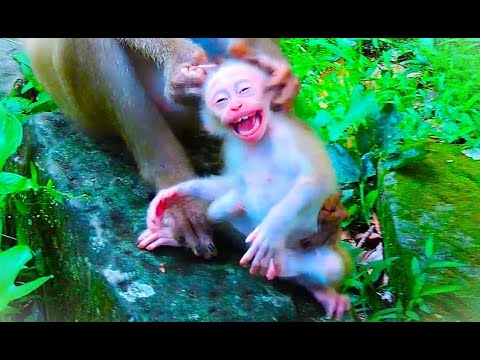
Long after the video ends, the image of baby Leo’s face tends to linger with viewers. His wide, wet eyes and open mouth become a symbol of vulnerability that is impossible to dismiss. Whether or not the mother’s behavior constitutes a cause for concern within the context of primate social norms, the emotional truth of the footage is undeniable: a small creature was in distress, and those who witnessed it felt that distress deeply.
That shared emotional experience, multiplied across thousands of viewers, is a testament to the power of visual storytelling and the enduring strength of cross-species empathy.
Source: “S-ad Facial Of Baby LEO Was C-rying L0udly For Mom St0p !!Mom’s Behavior Is Making Baby LEO H-ardly” — Monkey Library, YouTube (https://www.youtube.com/watch?v=o7hl7aOefKs)
Watch the original video →