Baby Monkey Alfie Finds His Courage While Mom Amanda Welcomes Visitors to the Forest Family
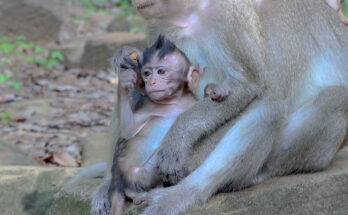
The morning light moved softly through the trees surrounding the ancient paths near Angkor Wat. The forest was already awake with distant bird calls and the quiet rustling of leaves overhead. Sitting close to his mother Amanda, little Alfie watched the world around him with wide and curious eyes.
Not long ago, Alfie preferred to stay close to Amanda’s side, carefully observing every movement around him before taking even a few steps on his own. The busy forest could feel large and unfamiliar for a young monkey still learning about his surroundings.
This morning felt different.
Amanda appeared relaxed as several familiar monkeys slowly approached the group. There was no rush and no tension—only the gentle rhythm of animals sharing the same peaceful space beneath the trees.
Alfie noticed the visitors immediately.
For a few moments, he stayed close to Amanda’s arm, peeking carefully from behind her as if deciding whether this new situation was safe enough to explore. Amanda remained calm, occasionally glancing toward him while continuing to sit comfortably among the others.
That quiet confidence seemed to give Alfie courage.
Slowly, he stepped forward.
The distance was small, only a few feet, but for Alfie it appeared to be an important moment. He paused, looked back toward Amanda, and then continued moving toward the edge of the group.
One of the younger monkeys nearby noticed him and simply sat down without approaching too quickly. The forest remained quiet except for leaves moving in the morning breeze.
Alfie stopped, watched, and then sat down as well.
For several minutes he simply observed the others, his attention moving from one face to another. Every so often he looked back toward Amanda, who remained nearby and watchful without interrupting his small adventure.
The moment felt familiar to anyone who has watched a child slowly gain confidence in a new environment.
There was no dramatic event and no sudden change.
Instead, there was something quieter and perhaps more meaningful—the gradual growth of trust.
As the morning continued, Alfie became noticeably more relaxed. He shifted closer to the group, occasionally following small movements and showing curiosity about everything happening around him.
Amanda never moved far away.
Her presence seemed to provide the reassurance Alfie needed to continue exploring while knowing he could always return to safety if he wished.
By late morning, Alfie was sitting only a short distance from the others, no longer hiding behind Amanda’s side.
The forest around Angkor Wat has witnessed countless moments over the years, but scenes like this continue to stand out for visitors and caretakers alike.
Growth often happens quietly.
Confidence rarely arrives all at once.
Sometimes it appears in small steps taken beneath old trees, with a patient mother nearby and a peaceful forest offering space to learn.
As the group settled beneath the shade for the warmer hours of the day, Alfie rested close to Amanda once again.
But something had changed.
The young monkey who had watched the world from behind his mother’s shoulder now seemed a little more ready to become part of it.