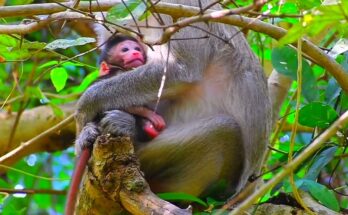
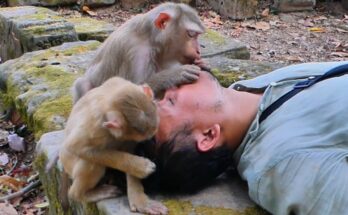
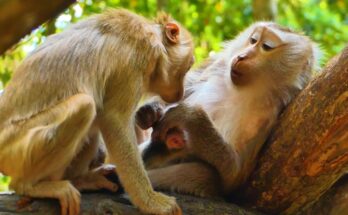
The morning air in Angkor was still, the kind that carries sound gently without asking for attention. High in a low fig tree, a young monkey sat unusually quiet. At first, it looked like rest. Only after watching longer did the reason become clear.
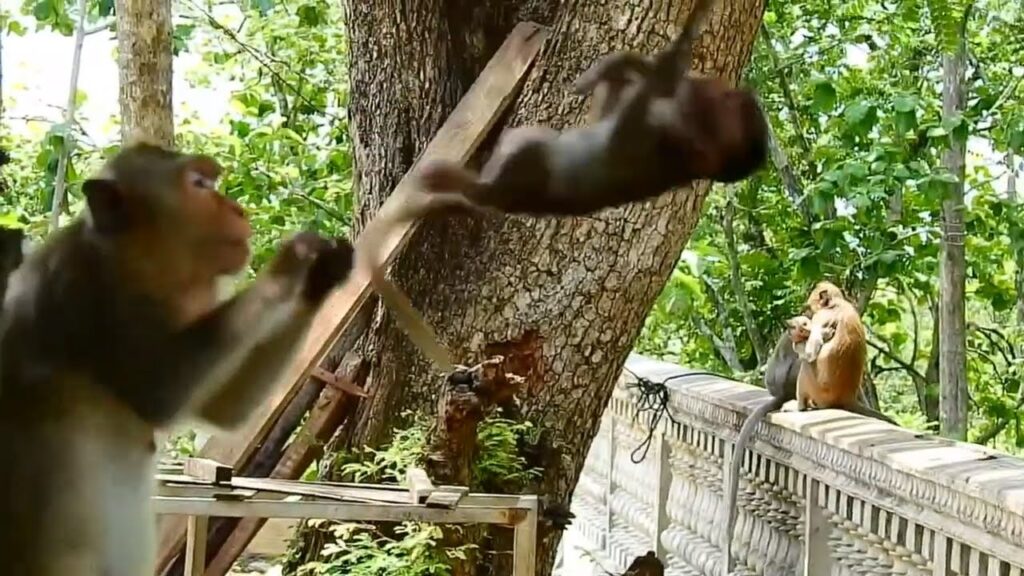
A thin piece of string—likely dropped by visitors long ago—was looped around the baby’s head. It wasn’t tight enough to cause panic, but it was enough to change how the morning unfolded. The young monkey moved carefully, slower than the others, tilting its head as if trying to understand why something unfamiliar would not let go.
Nearby, older monkeys paused their play. A mother figure watched from a branch above, alert but restrained, as animals often are when something doesn’t fit their instincts. The forest continued as usual—birds calling, leaves shifting—but around this small figure, time seemed to narrow.
What stood out most was not fear, but patience. The baby did not thrash or cry. It simply waited, adjusting, breathing, learning in real time how to exist with discomfort. In that quiet effort, there was something deeply human—an early lesson in endurance, unfolding beneath ancient trees.
Moments like this pass quickly in the wild. Sometimes help comes. Sometimes it doesn’t. What remains is the reminder that even the smallest traces humans leave behind can linger far longer than intended, shaping lives in ways unseen.