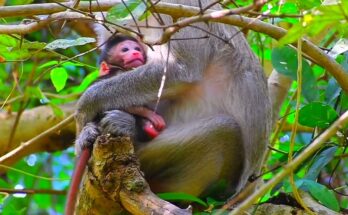
In the upper branches of an old Angkor tree, a baby monkey explored with the careful curiosity of someone still new to the world. Each step was measured, each grip uncertain but determined.
Not far away, another monkey moved along the same branch. The distance between them closed slowly, almost unnoticed. There was no aggression in the air—just pressure, proximity, and a fragile balance.
The baby hesitated.
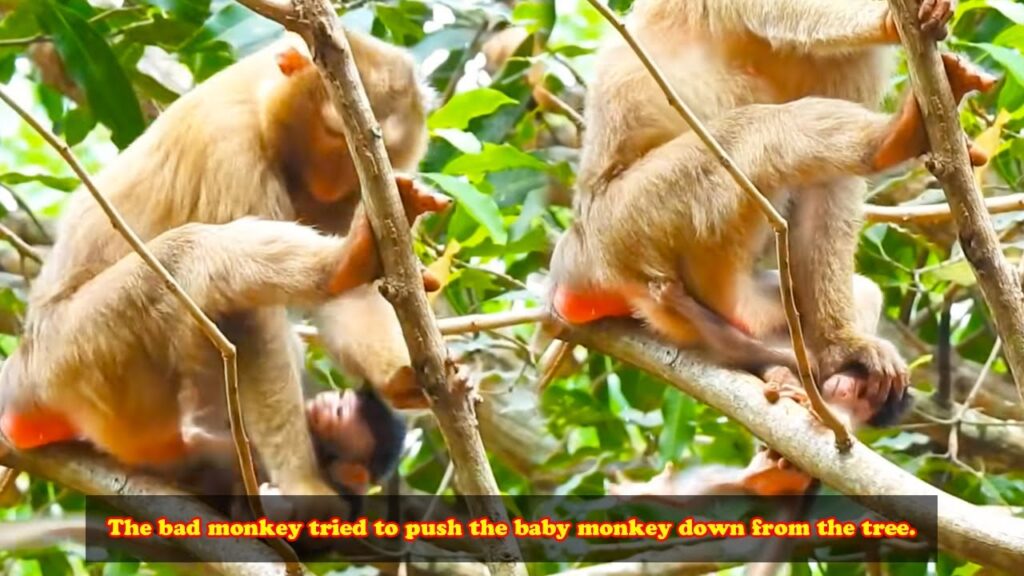
That hesitation was everything.
Below, the mother sensed it. She looked up, her posture changing instantly. Before the baby could shift his weight again, she was already climbing, her movements confident and fast, shaped by years of survival.
As the branch bent slightly, the baby lost his footing. His body dipped, legs swinging free for a brief second that felt far longer than it was.
The mother reached him then, pulling him against her chest. Her grip was firm, unshaking. The baby stilled immediately, clinging to her as if the world had narrowed to that single point of contact.
The other monkey stepped away, the moment dissolving without conflict. The forest did not react. It simply continued.
The mother stayed there longer than necessary, holding the baby close, adjusting her grip, brushing her face against his head. There was no lesson spoken, only one felt—safety is not guaranteed, but protection can arrive swiftly.
From a distance, it was a quiet scene. Up close, it was everything.