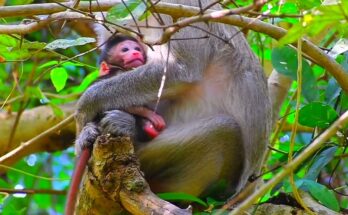
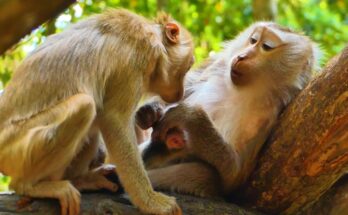
The morning light filtered softly through the tall trees near Angkor Wat, touching the forest floor in slow-moving patches. It should have been a calm hour. The troop moved lazily, foraging, grooming, settling into the rhythm of another day.
Then everything narrowed to one small sound.
The baby had wandered only a short distance, curious and unsteady, exploring the world just beyond his mother’s reach. A broken root, half-hidden by leaves, caught his tiny leg. He didn’t cry loudly—just enough to say something wasn’t right.
His mother froze.
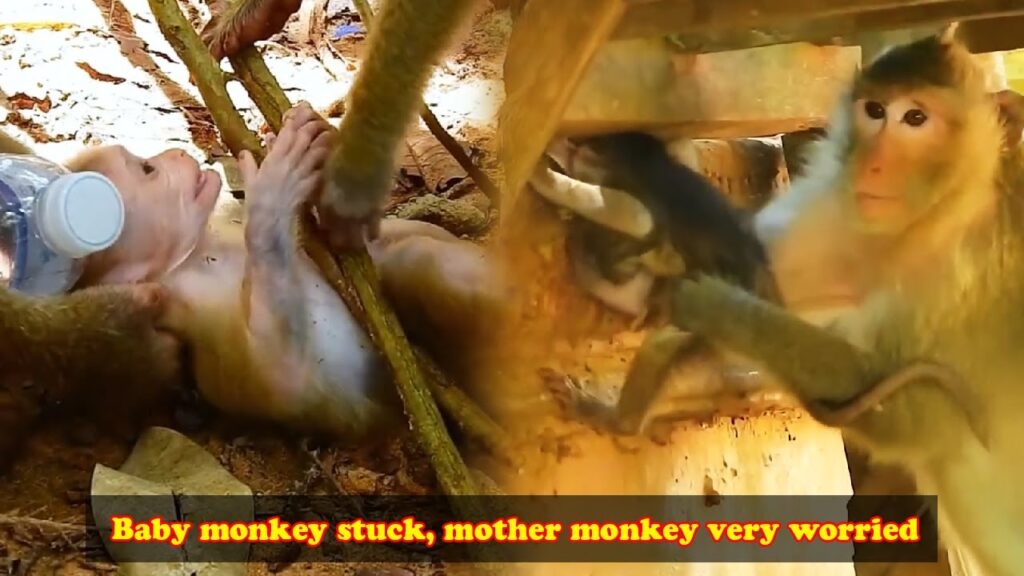
In an instant, her posture changed. Her head lifted, eyes scanning, breath held. She moved toward him quickly but carefully, as if afraid that sudden motion might make things worse. For a brief moment, her hands hovered, unsure where to grip without causing pain.
This was not panic in the human sense. It was focused fear—quiet, controlled, deeply present.
The baby twisted, confused more than hurt. His small fingers grasped at the air, then at her fur when she finally reached him. She made a soft sound, low and steady, the kind meant only for him. Around them, the forest continued—birds calling, leaves shifting—but her world had narrowed to the space between her arms.
With slow precision, she freed his leg. No force. No rush. Just patience.
When he was loose, she pulled him close, pressing him briefly against her chest. He clung there, breathing fast, learning something new about the edges of safety and distance. She sat still for a long moment afterward, one hand resting on his back, eyes still alert.
Nothing dramatic followed. No long cries. No disruption to the troop. But something had changed.
For the baby, the forest had revealed its first small hazard.
For the mother, it was a reminder that danger doesn’t announce itself—it waits quietly.
As they moved on, she kept him closer than before. Not tighter. Just closer.
And the forest, having made its point, let them pass.