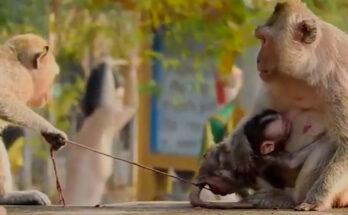
The forest was still that morning, the kind of stillness that carries every small sound. Leaves shifted gently above, and distant birds marked time. That was when Champlin, only moments into life, loosened from his mother’s grasp and slipped softly onto the forest floor.
There was no panic in the moment. No sudden movement. Just a pause—brief, quiet, and surprisingly human in its uncertainty.
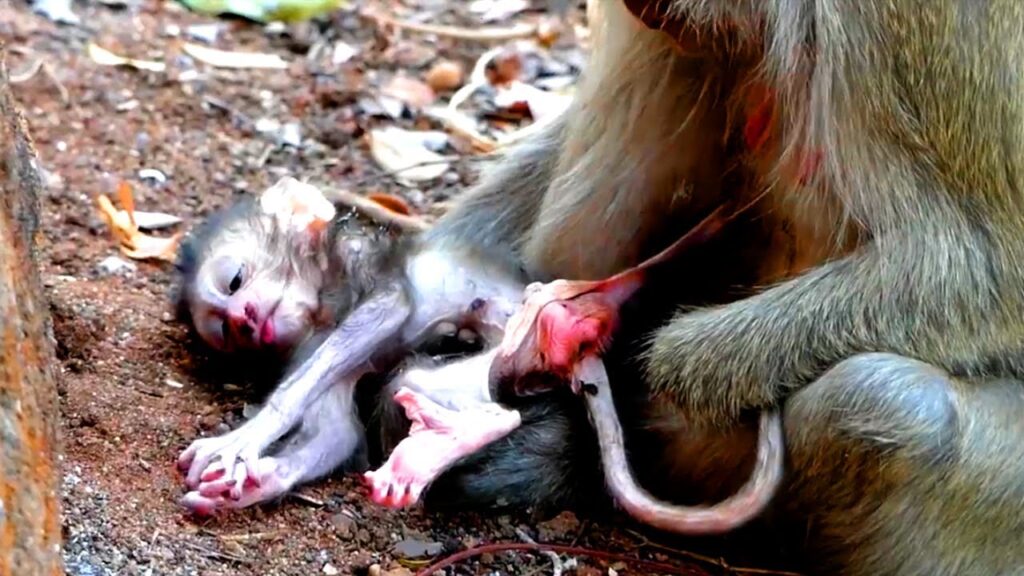
His mother stood only a short distance away. She didn’t rush. She didn’t cry out. Instead, she turned her head, as if checking the world around her before returning to the smallest responsibility she had ever known. In that space between them, Champlin lay still, learning his first lesson beneath the towering trees: the forest notices everything.
The ground was cool with fallen leaves and soft soil. Champlin’s tiny fingers curled instinctively, searching for something familiar. A root. A leaf. A sense of balance. It lasted only seconds, but those seconds felt long enough to hold meaning.
When his mother returned, there was no drama in the reunion. She lifted him with care, adjusting her hold as though learning alongside him. Motherhood, here, isn’t perfection—it’s awareness, built moment by moment.
Watching from a distance, it was impossible not to feel how fragile beginnings are, even in a place as ancient as Angkor. These monkeys have lived among the temples for generations, yet every newborn arrives as something entirely new.
Champlin pressed closer to his mother’s chest, his breathing evening out as the forest resumed its rhythm. Nothing remarkable happened next—and that was the remarkable part. Life continued, steady and unannounced.
In the Angkor forest, lessons don’t come with warnings. They arrive quietly, pass quickly, and leave behind a trace of understanding. Champlin’s first was simple: the world is wide, but care always returns.