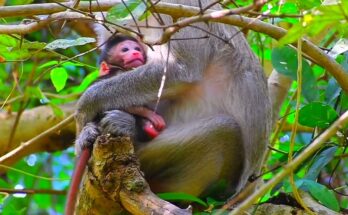
From the first moment he appeared, the young monkey seemed determined to test everything. He pulled at bark, chased insects, and wandered just far enough to make watching adults shift their attention.
Each time he crossed an invisible line, his mother responded swiftly—not with chaos, but with certainty. A sudden movement. A warning sound. No follow-up.
He froze every time. And every time, after a few heartbeats, he returned.
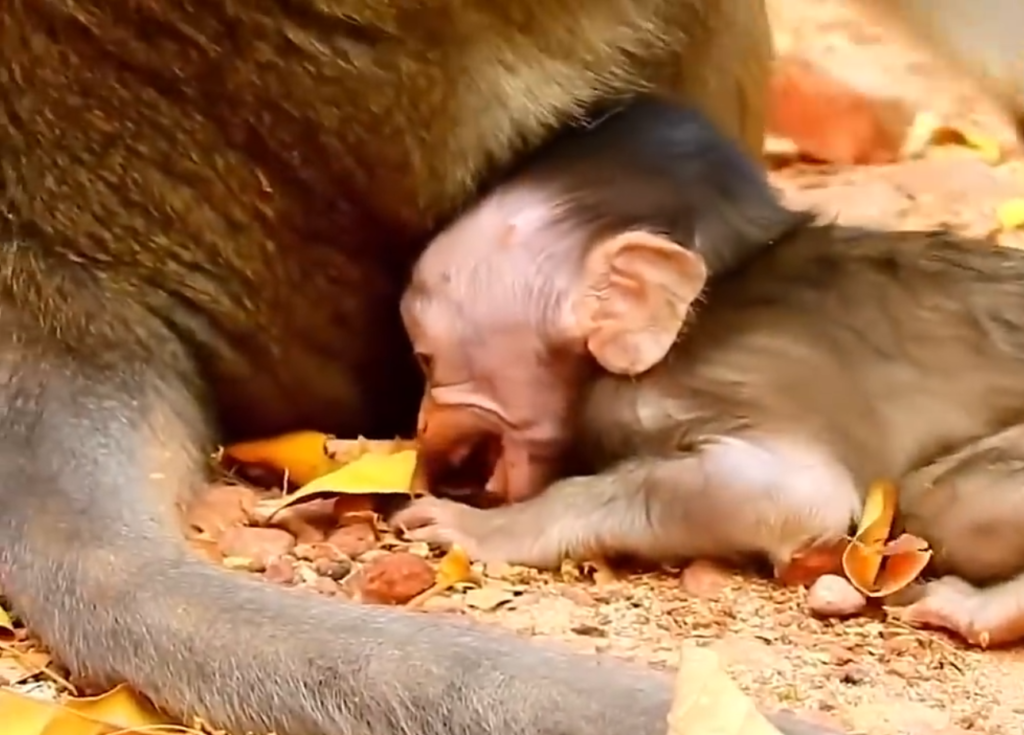
The Angkor Wat forest has raised generations like this. There are no explanations here—only cause and effect. Mothers teach their young how to survive predators, falls, hunger, and conflict long before comfort becomes useful.
Still, the young monkey hesitated more with each encounter. His body language softened. His mischief grew cautious. He learned where he could roam and where he could not.
What struck me most was his persistence. Even without reassurance, he chose proximity. He sat near her feet. He watched her eat. He waited.
The mother remained alert, never careless. When another monkey passed too close, she intervened instantly. Her boundaries were firm, but her vigilance never broke.
By midday, the forest settled into its slower rhythm. The little monkey curled briefly against a tree root, eyes heavy. His mother stayed nearby—close enough to guard, far enough to teach independence.
This was not rejection. It was preparation.
In the Angkor forest, love is often quiet.