I first noticed him because the forest was too quiet.
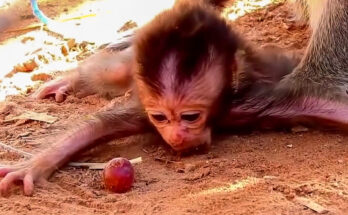
In the early morning light near Angkor Wat, the usual rhythm of birds and distant calls softened, as if the trees themselves were holding their breath. That was when I saw a tiny shape pressed into the leaf litter beneath a fig tree. A newborn monkey—eyes barely open, limbs trembling—alone.
No mother called back to him.
Newborn monkeys cling instinctively, yet this little one lay still except for the faint rise of his chest. His fur was thin, not yet warmed by another body. I waited, believing his mother would return. Minutes passed. The forest remained unchanged.
In the wild, abandonment is never loud. It happens quietly, often without witnesses.
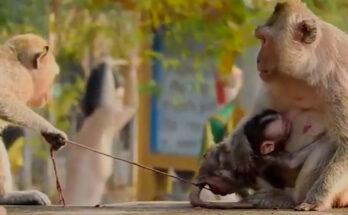
I watched from a distance, careful not to disturb the space. Nearby, adult monkeys moved through the canopy, focused on food, on survival, on each other. None descended. None looked back.
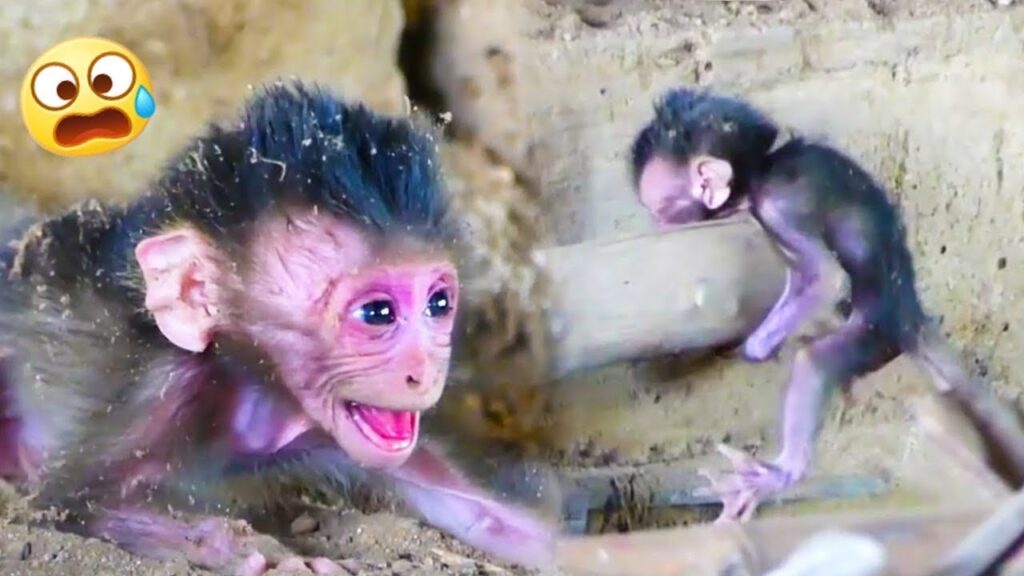
The baby shifted slightly, making a soft sound—not a cry, more like a question the forest didn’t answer.
In Angkor, where ancient stone and living forest exist together, moments like this remind you how fragile life can be. This newborn had arrived too early, too alone, or simply at the wrong moment. The reason doesn’t matter. What mattered was that he was still breathing.
As the sun climbed higher, ants began to gather near the leaves around him. That’s when I knew waiting longer would change nothing.
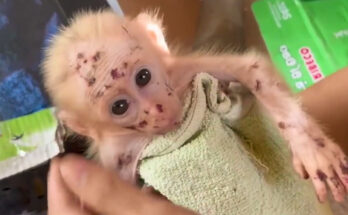
Carefully, gently, we intervened—slow movements, low voices, respect for the life in front of us. His body was warm but weak. When he curled his tiny fingers around a cloth, it wasn’t strength—it was instinct, memory written before experience.
The forest didn’t resist. It simply watched.
Some stories don’t end the way nature intended, but they still belong to nature. This was one of them.
That morning, Angkor didn’t give us drama. It gave us silence, and within it, a life that almost slipped away unnoticed.