I first met her on a humid dawn in the Angkor Wat forest, when the morning mist curled around mossy temple stones and the jungle stirred awake. I was photographing the light on ancient carvings when I heard a small, unmistakable cry—soft at first, then rising in desperate urgency.
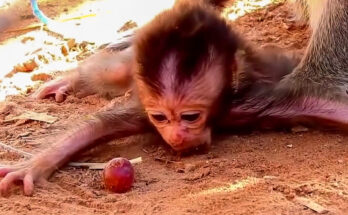
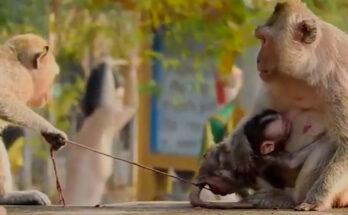
A tiny baby long-tailed macaque clung to the side of a large ficus tree. Its eyes were wide, moist, and pleading. At first I thought he was simply startled by my presence, but then I saw her—his mother—a frail figure just a few feet away, combing through fallen leaves and rotting fruit on the forest floor. Her ribs showed through her scraggly fur, and her movements were slow, weighed down by hunger and exhaustion.
He was crying for milk—the kind only she could give—but her body seemed to hold the memory of strength more than its reality now. I watched him reach for her with little arms, voice trembling, while she lifted her head and tried to answer, as though she had milk left in her, but it was clear she did not. She needed food too.
That moment—the tiny cry and the quiet desperation in her eyes—has stayed with me.
I’ve seen many wildlife scenes in my years as a photographer. I’ve watched mothers shield their young from danger, teach them how to forage, groom them, and even share the last of their findable fruit. But I had never seen a mother and infant so deeply in need at the same time. Usually, one will sacrifice for the other—but here, both were caught in the cruelty of circumstance. That heartbreak is not novel in the wild—it is real, and it is everywhere.
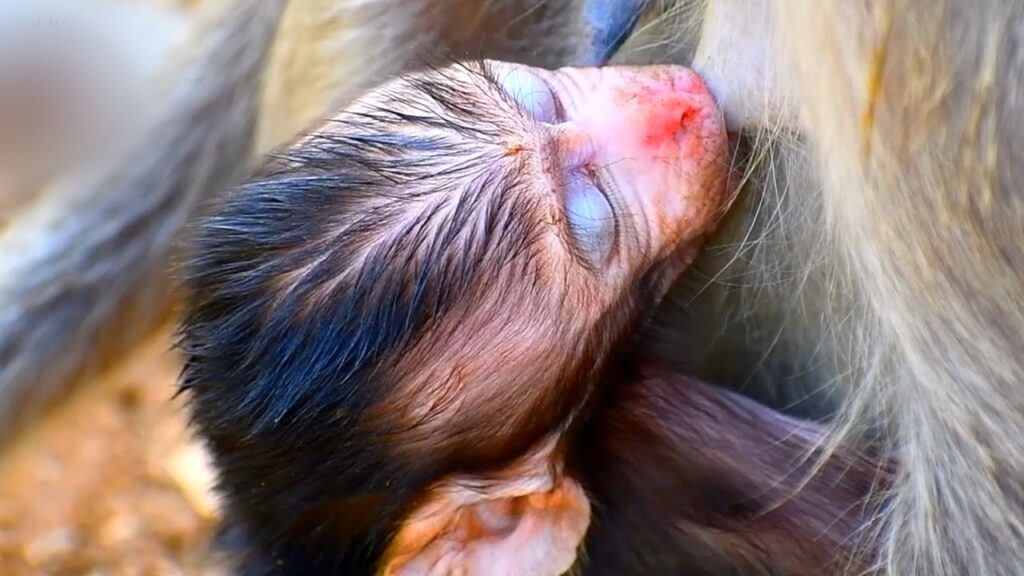
I sat down a few feet away, careful not to disturb them, and watched the baby clamber onto her back. The forest noise swelled around us—distant bird calls, a rustling branch as something larger passed—but inside my heart, the boy’s cry echoed louder than all the forest’s sounds combined.
She sniffed at a fallen fig, but there was nothing inside but dry skin and seeds. Gently, she nudged him closer to me, almost like she was hoping I could give him what she could not. I felt my breath catch in my throat.
For years, people have told me that stories like these can change hearts. And that day, I understood why. Raw emotion isn’t just something we feel when we watch a video or scroll past a clip online—it’s something that lives inside us, connecting us to the lives around us, whether human or animal.
I reached into my bag and pulled out a small packet of fruit I had brought for myself. I laid it a short distance away, not wanting to startle them. She saw it immediately—her eyes sparking with a fragile hope—and slowly approached, guiding her baby beside her. The little one’s cries eased as he watched her eat. His grip on her fur loosened, and for a moment, there was peace.
But the forest is not a place that sustains hope easily.
Even as she ate, her shoulders trembled—not from cold, but from the strain of hunger her body had worn for too long. I remembered an old Cambodian guide telling me how tourism changes everything here—including how animals adapt their diets around human presence. Some find scraps; others suffer when food becomes scarce. That struggle is silent to most—unseen behind the grand beauty of Angkor’s temples. Dailymotion
I knelt and watched them. She finished the fruit and then turned to look at her baby, who had curled against her side. The bond between them was unmistakable—love, worry, and instinct all wrapped up in her quiet gaze.
No one else walked that path that morning. Just us—the silent witnesses, the hungry mother, the desperate baby, and the ancient stones that have seen countless cycles of life and loss.
As the sun climbed higher, I knew I had to leave. But before I did, I whispered a promise to them—that I would share their story as truthfully as I could.
Because moments like these matter.
Not just because they are heartbreaking, but because they make us feel more deeply. They remind us of our shared struggle to survive, to care, and to hope—no matter how small or fragile the life holding on to us might be.
And if one person watching this story pauses to think about what it truly means to nourish—both physically and emotionally—then their cry will have been heard in the way it deserves.