The forest was unusually quiet that morning in Angkor Wat. The ancient trees stood tall, their massive roots gripping the stone ruins like guardians of forgotten stories. I had walked these paths many times before, but nothing could have prepared me for what I was about to witness.
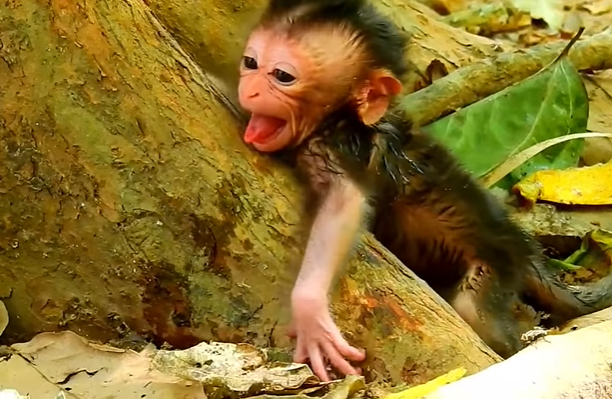
It started with a sound so small I almost missed it.
A cry.
Not the sharp cry of a child at play — but a weak, trembling sound, fragile and raw, drifting through the humid air. I stopped walking. My heart tightened. I followed the sound, step by careful step, afraid of what I might find — yet more afraid of what would happen if I didn’t.
Behind a cluster of fallen leaves near the roots of an ancient fig tree, I saw her.
A newborn baby.
She was wrapped loosely in a thin cloth, her skin still flushed and delicate, her tiny hands curled into fists as if clinging to life itself. Later, we would estimate she was only about five hours old. Five hours in this world — and already alone.
Her cries were soft now, almost exhausted, as though she had already learned how quickly the world could be cruel.
I knelt beside her, my knees sinking into the damp earth. My hands shook as I gently touched her blanket. She felt warm — alive — and that alone brought tears rushing to my eyes. The forest around us felt suddenly heavy, as if the ancient stones and towering trees were mourning with me.
Where was her mother?
That question echoed painfully in my mind. It’s easy to judge from a distance. Easy to call a mother careless. Easy to ask how anyone could walk away from a newborn baby. But standing there, holding that tiny life in my arms, the answer felt far more complicated — and far more human.
Angkor Wat is not just a tourist destination. It is a place where people live, struggle, survive. For some, life is a daily battle against poverty, fear, and impossible choices. I wondered if the baby’s mother had stood where I was standing now — heart racing, tears falling — feeling trapped by circumstances she couldn’t escape.
Did she believe leaving her baby here would give her a chance to be found?
Or did fear blind her in that desperate moment?
The baby whimpered softly as I held her close, her tiny chest rising and falling against my own. I wrapped her tighter in the cloth, trying to shield her from the insects, the cold earth, the dangers hidden in the forest. She calmed slightly, as if she could sense that someone was finally there.
I called out for help.
Local villagers arrived quickly, drawn by urgency and compassion. Without hesitation, they brought clean cloths and warm water. One woman gently stroked the baby’s head, whispering soothing words in a soft voice. Another nodded solemnly and said, “She is lucky. Very lucky.”
And she was.
So many babies are never found in time.
As we walked together toward the village, the baby cradled carefully in shared arms, I looked back once more at the place where she had been left. The forest looked the same — peaceful, timeless — yet it would never feel the same to me again.
This tiny girl had entered the world surrounded not by family, but by ancient ruins and silent trees. And yet, she survived.
Later, as the baby was taken to receive proper medical care, I sat alone and let the tears finally fall. I thought about mothers everywhere — in Cambodia, in America, across the world — who struggle silently. Mothers overwhelmed by fear, poverty, shame, or loneliness. Mothers who love deeply but feel trapped by circumstances beyond their control.
This story is not just about abandonment.
It is about what happens when society fails to protect its most vulnerable — and what happens when ordinary people choose compassion instead of judgment.
That newborn will grow up with a story she may never fully remember — but one that will forever shape her life. A story that began in sorrow, but did not end there.
Because even in the darkest moments, humanity can still answer a cry.
And sometimes, five hours is all it takes for a life to be lost — or saved.