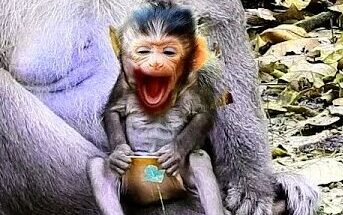
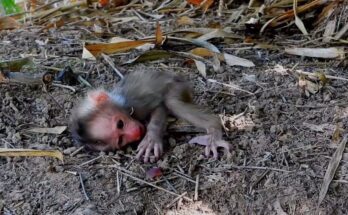
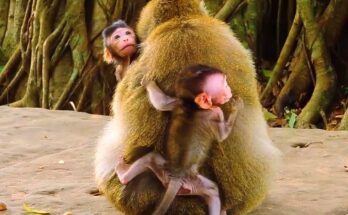
I still remember the damp morning air creeping through the ancient forest near Angkor Wat as I carried my newborn in my arms, her tiny body trembling from hunger and cold. Darkness still ruled the path, and the only sound I heard was the soft cooing of forest birds waking up. My heart pounded as I unearthed what little supplies we had — a bowl, a fragile bottle, and hope. She cried. Soft at first, then louder. Every tear she shed felt like a call to the world bigger than the ruins around us.
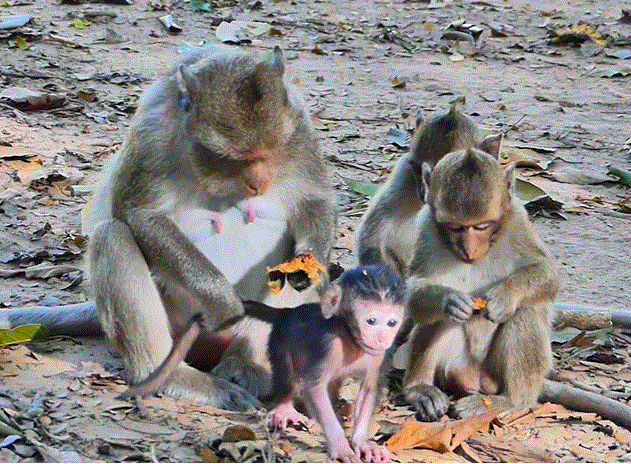
She was born just two days ago — the first child of a mother with hands so worn she could barely cradle a leaf, let alone a newborn. I watched her tiny fingers curl, grasping at nothing but air. As I tried to warm her, I thought of the stories people in the U.S. hear about new mothers in hospitals — warm rooms, clean sheets, family support. But here we were, under moss‑covered stones, with only each other and a fragile dream that she might live.
I rummaged through our bag; there was only a half‑empty bottle of formula and a small cloth scraped from my own shirt. My eyes filled with tears — for her hunger, for her fragile life, for the injustice of it all. But I made a promise: I would do everything to feed her, keep her warm, keep her alive.
As I warmed the bottle with water heated over a tiny fire, the first rays of sun filtered through the trees — golden light dancing on ancient stones that had seen centuries pass. I raised the bottle to her lips. She opened her mouth. I held my breath. The first drop touched her tongue and she sucked. With each swallow, my heart felt heavier, relief mingled with fear.
Minutes passed. She relaxed. Her cries quieted. I wrapped her close to my chest, skin to skin, breathing warmth into her fragile body. Somewhere nearby, I heard the moss shift, a small lizard scurry — life, even here, pressed on.
I thought about mothers in the U.S. — maybe reading on their phones, sharing pictures of their babies in cozy nurseries, complaining of sleepless nights. I wondered if they could feel, even for a moment, the hunger, the desperation, the raw love I felt. Because love doesn’t come from comfort. It comes from survival, from holding a life so small it could slip away in a heartbeat.
By midday, the forest had warmed. The baby’s cries turned to soft coos. I dared to hope. That she would grow. That she would smile one day. That under the watchful eyes of those ancient stones, she would find a world kinder than this first fragile morning.
Because even in hunger, there can be hope. Even in the darkest forest, love can light the way.